
Best Age for Braces – When Should Treatment Start?
The best age for braces depends on the teeth, the bite and how your child is developing. Many patients are first assessed in the early teen years, but braces are not only for teenagers. At Azure Dental, we help parents, teens and adults understand the right time to start and which options may make the most sense.
What is the best age for braces?
For many patients, the best age for braces is during the teenage years, when most adult teeth have come through and treatment can be planned more predictably. That said, there is no single perfect age for everyone. Some children need an earlier assessment, while many adults choose braces later in life and still achieve excellent results.
Why the teenage years are often the best age for braces
Teenage years are often a practical time for braces because adult teeth are usually present, bite issues are easier to assess properly and treatment can be planned around long-term alignment and retention. This is why many orthodontic treatments begin in the early to mid-teen years.
The main thing to remember about the best age for braces
The best age is not simply “the earlier the better”. Starting too early when treatment is not needed can be unnecessary. Starting later is not automatically a problem either, especially for adults who are motivated and suitable for treatment.
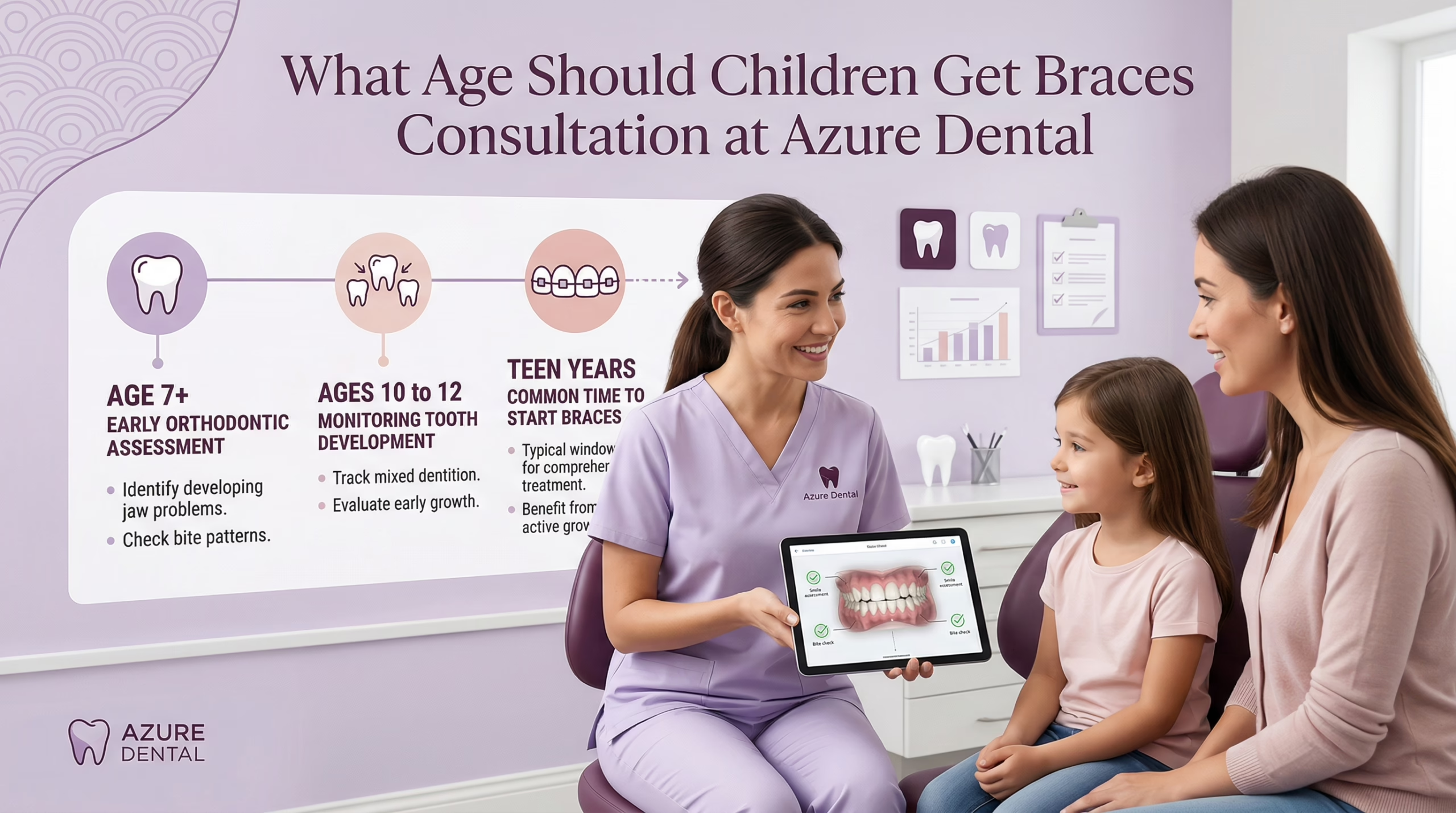
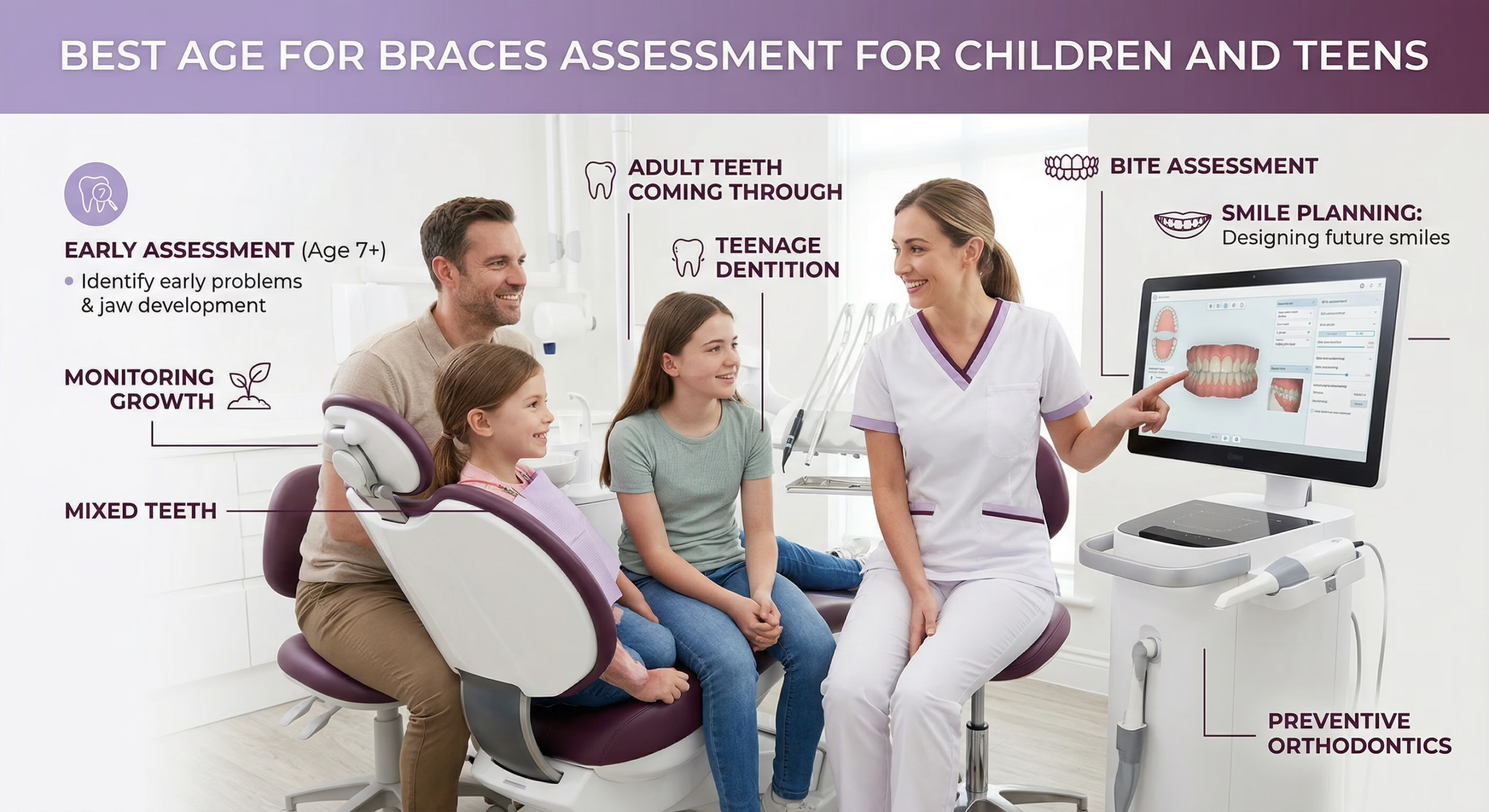
Can a 10 year old get braces?
Sometimes, yes, but not every 10 year old needs braces straight away. At that age, some children are still developing, and a review may be more useful than full treatment. The decision depends on how the teeth are erupting, whether there is crowding or bite imbalance, and whether there is a reason to intervene earlier.
When a 10 year old may need a braces review
An earlier assessment may be sensible if teeth are coming through in unusual positions, crowding is obvious, the bite looks off or parents are concerned about how the smile is developing.
When waiting may be better than braces at age 10
If adult teeth are still coming through and the case is not urgent, it may be better to monitor and review rather than begin treatment too soon.
Why a braces assessment matters at this age
A proper review helps separate a child who needs early planning from one who simply needs time for development to continue.
Are braces more effective in the teenage years?
Teenage treatment is often effective because the mouth has developed enough for planning, while growth and bite development can still be considered. That does not mean adults get worse results. Adults can still have excellent outcomes. It simply means the teenage years are often a very practical treatment window.
Benefits of braces in the teenage years
- Most adult teeth are present
- Alignment and bite are clearer to assess
- Long-term retention planning can begin early
- Parents and teens can choose from several treatment options
Why adults are not too late for braces
- Adult braces are common
- Discreet options make treatment easier socially
- Motivated adults often do very well with treatment
- The result depends more on suitability than age alone
Can adults still get braces?
Yes. Adults can absolutely get braces, and many do. Some are correcting alignment that was never treated earlier. Others have had relapse after not wearing retainers years ago. Adults often care more about discretion, treatment comfort and fitting braces around work and social life, which is why white braces and aligners are popular choices.
Why adults choose braces
- To improve crowding or spacing
- To correct bite issues
- To prepare for whitening or cosmetic treatment later
- To improve confidence in their smile
Adult braces and discreet treatment options
Adults may suit fixed braces, white ceramic braces or clear aligners, depending on the case and priorities. The right system depends on what your teeth need and how discreet you want treatment to be.
Signs your child may need a braces assessment
Parents often notice small issues before a child ever asks about braces. That does not always mean treatment is needed immediately, but it can be a good reason to book an assessment.
Common signs to look for before braces
- Crooked, crowded or overlapping teeth
- Large gaps between teeth
- Upper and lower teeth not meeting comfortably
- Teeth coming through in unusual positions
- Visible bite issues such as a prominent overbite or crossbite
What happens after a braces assessment
An assessment helps clarify whether the best plan is to monitor development, begin treatment planning or discuss a future start date once the teeth are more established.
Early orthodontic assessment vs waiting for braces
Some families worry they may miss the right window. In reality, an early assessment is useful because it gives you a plan. That plan may be “start now”, but it may just as easily be “review later”. Good orthodontic care is about timing properly, not starting treatment for the sake of it.
Book a braces assessment
We look at the teeth, bite and stage of development to understand what is happening now.
Decide whether braces are needed yet
Some patients are ready to start. Others are better monitored until more adult teeth are in place.
Compare braces and aligner options
If treatment is appropriate, we explain braces, white braces and aligners in plain English.
Plan the next sensible step for treatment timing
That may be immediate treatment, later treatment or review-only monitoring.
Helpful braces guides and next steps
The best age for braces is only one part of the decision. These pages cover the questions families and adults usually ask next.
Frequently asked questions about the best age for braces
These are some of the most common timing questions parents and adults ask before booking.
What is the best age to get braces?
For many patients, the teenage years are a practical time to start braces because most adult teeth have come through. However, the best age depends on the individual case, and some adults are excellent candidates too.
Can a 10 year old get braces?
Sometimes, yes. Some 10 year olds benefit from early assessment or early treatment, while others are better monitored until their teeth develop further.
Are braces only for teenagers?
No. Adults can also get braces and often achieve excellent results, especially when treatment is planned around their needs and lifestyle.
Can adults still get good results with braces?
Yes. Adults can achieve very good results with braces or aligners, depending on the case and the treatment chosen.
How do I know if my child may need braces?
Signs can include crowding, overlapping teeth, spacing, bite problems or teeth coming through in unusual positions. An assessment is the best way to know whether treatment is needed now or later.
Is early treatment always necessary?
No. Sometimes the best plan is to review and monitor rather than start treatment immediately. Good timing matters more than rushing into braces too soon.
Does the NHS provide braces for children?
NHS orthodontic eligibility depends on clinical need rather than age alone. Some children may qualify, while others may not.