6 The Beacons, 1 School Lane, Formby, L37 3LN

Calm, comfortable private & cosmetic dentistry in Formby
Calm, comfortable private & cosmetic dentistry in Formby
Our Smile Makeover Liverpool treatments combine veneers, bonding, whitening and digital design to create a confident, natural transformation tailored to your face.
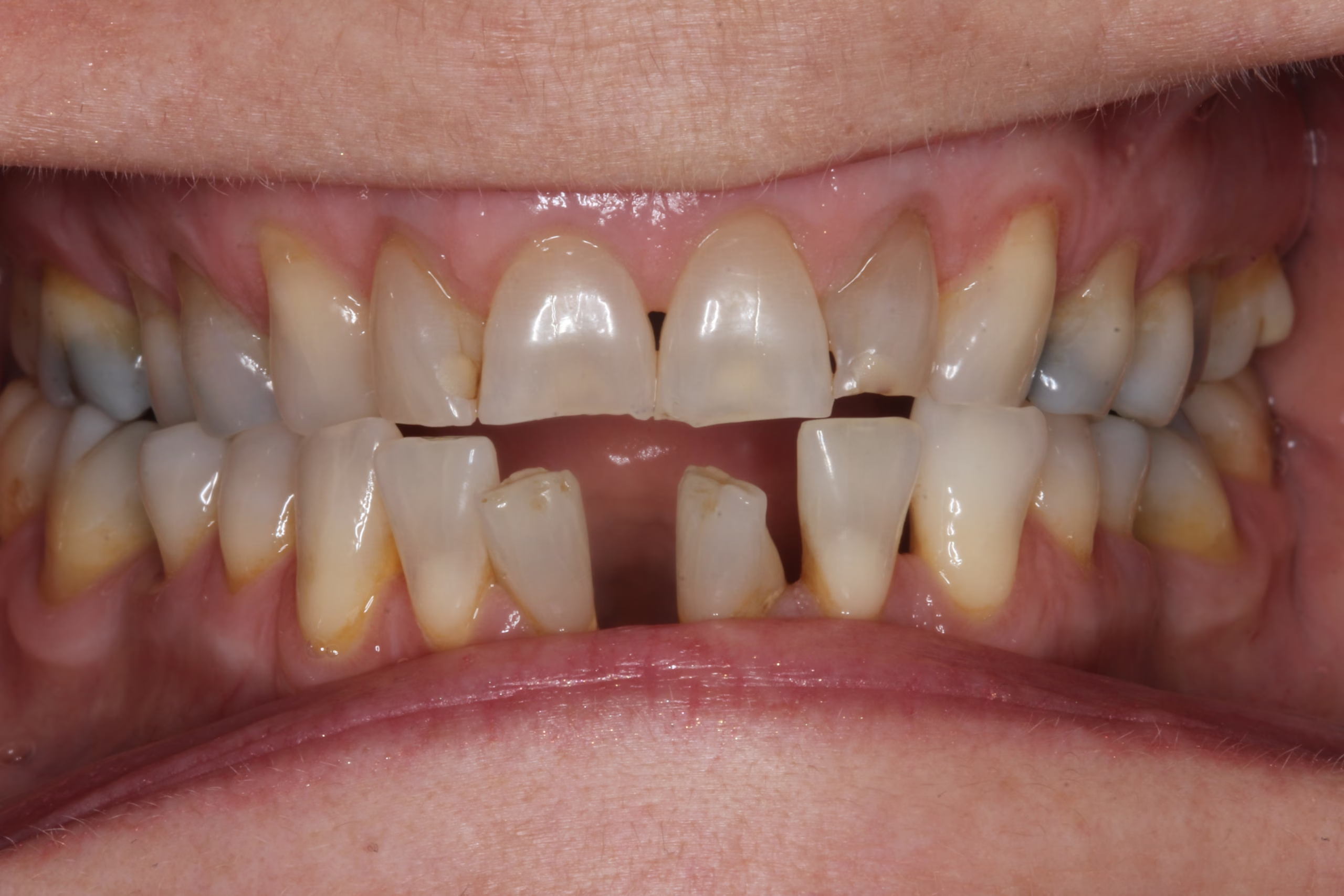
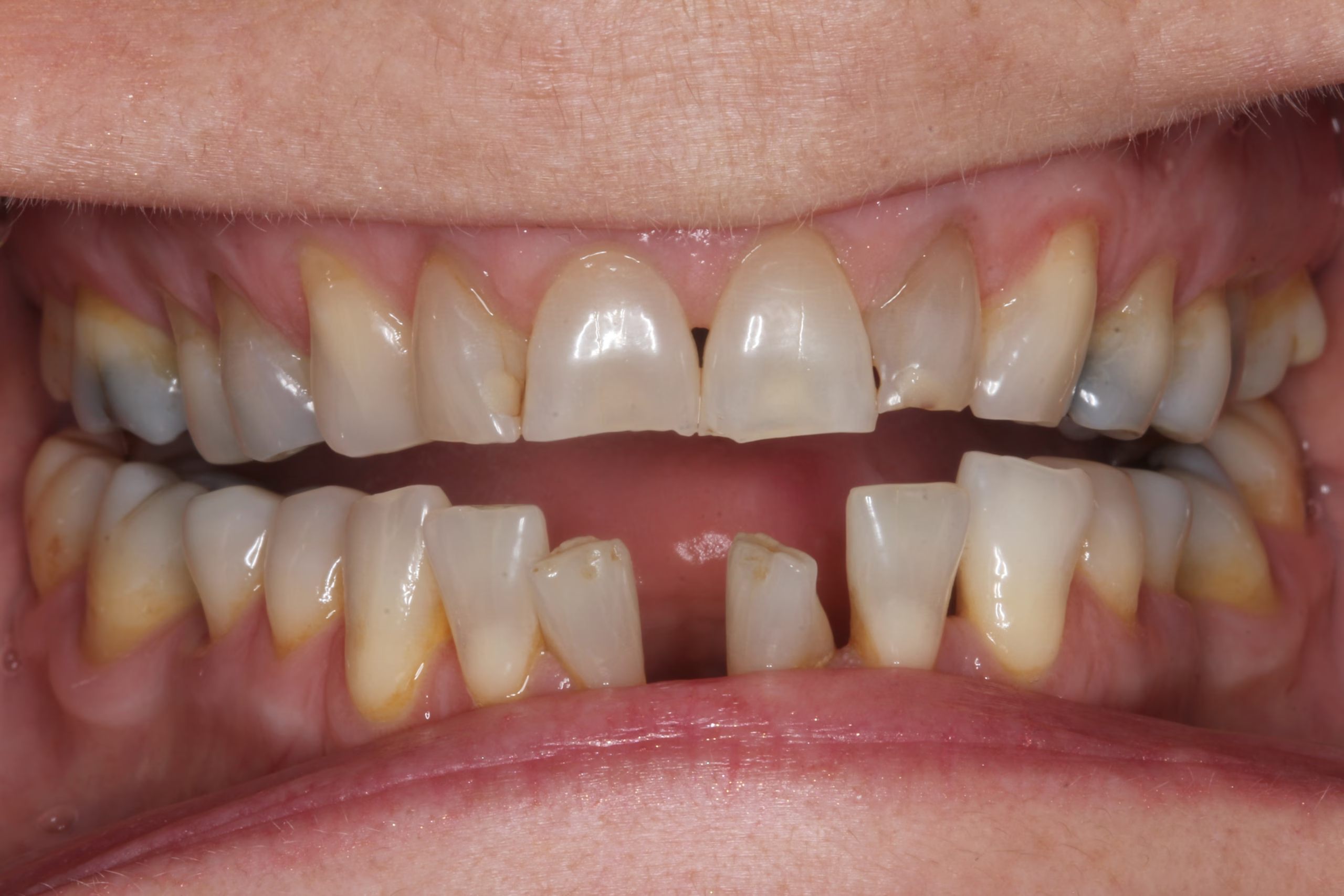
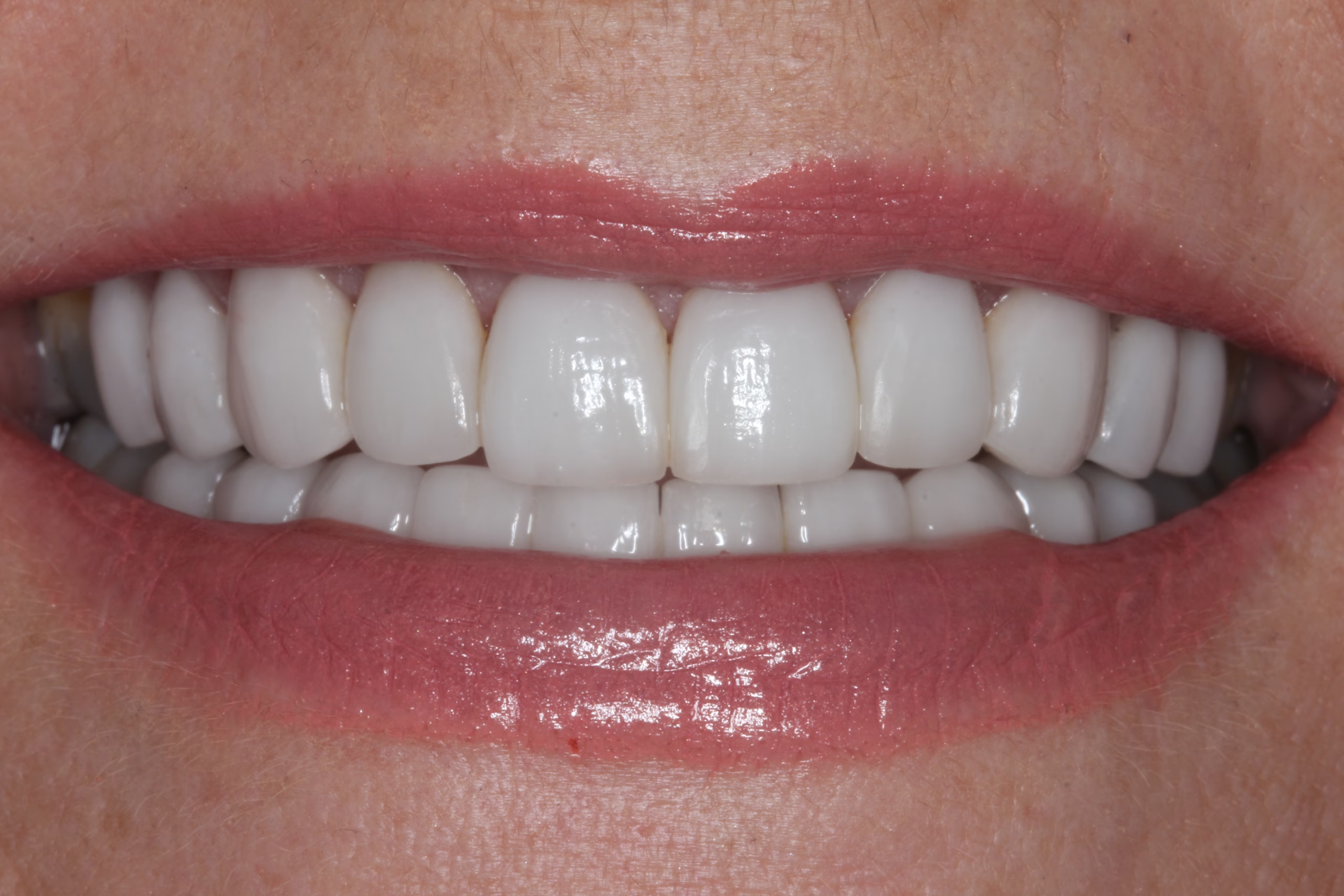
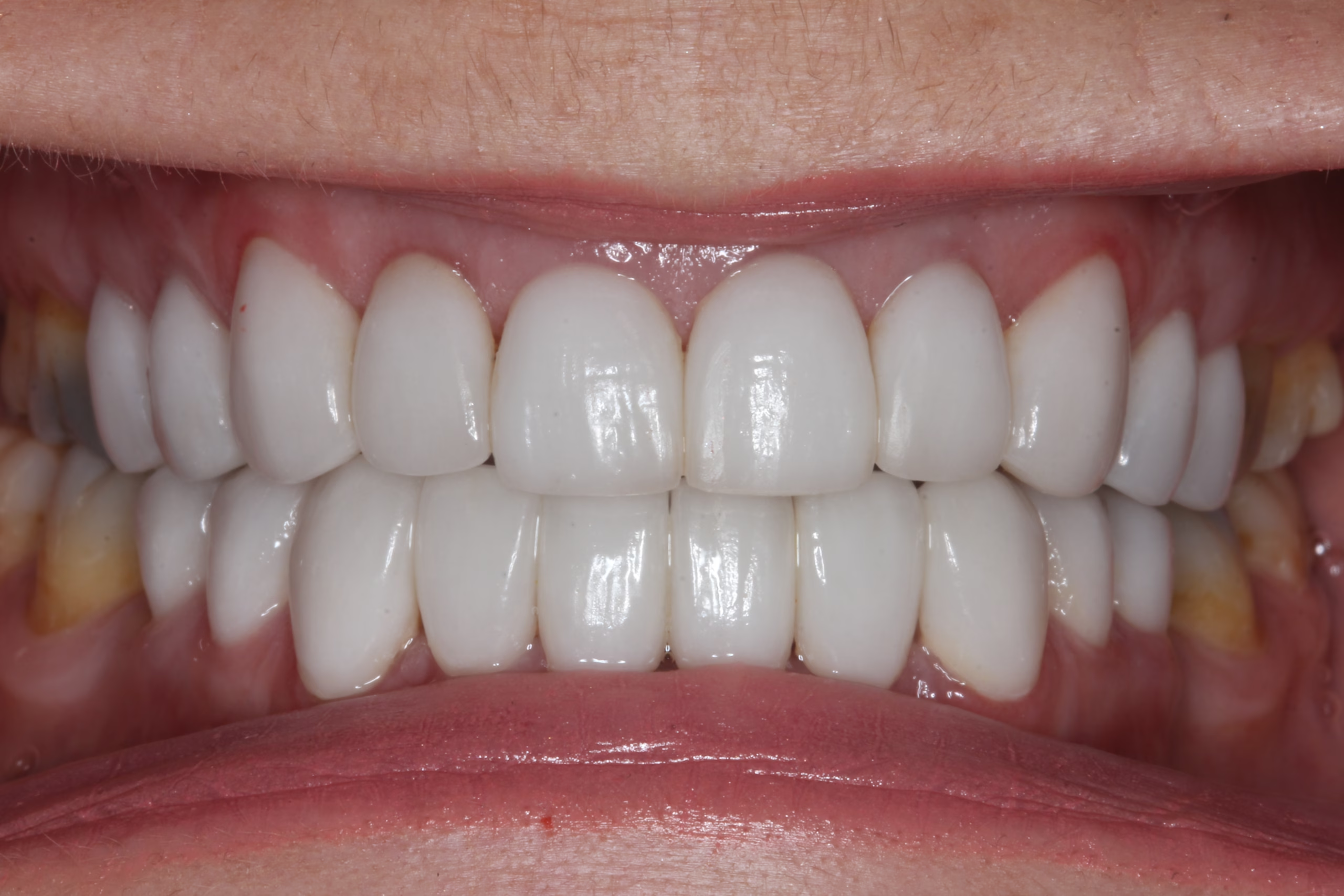
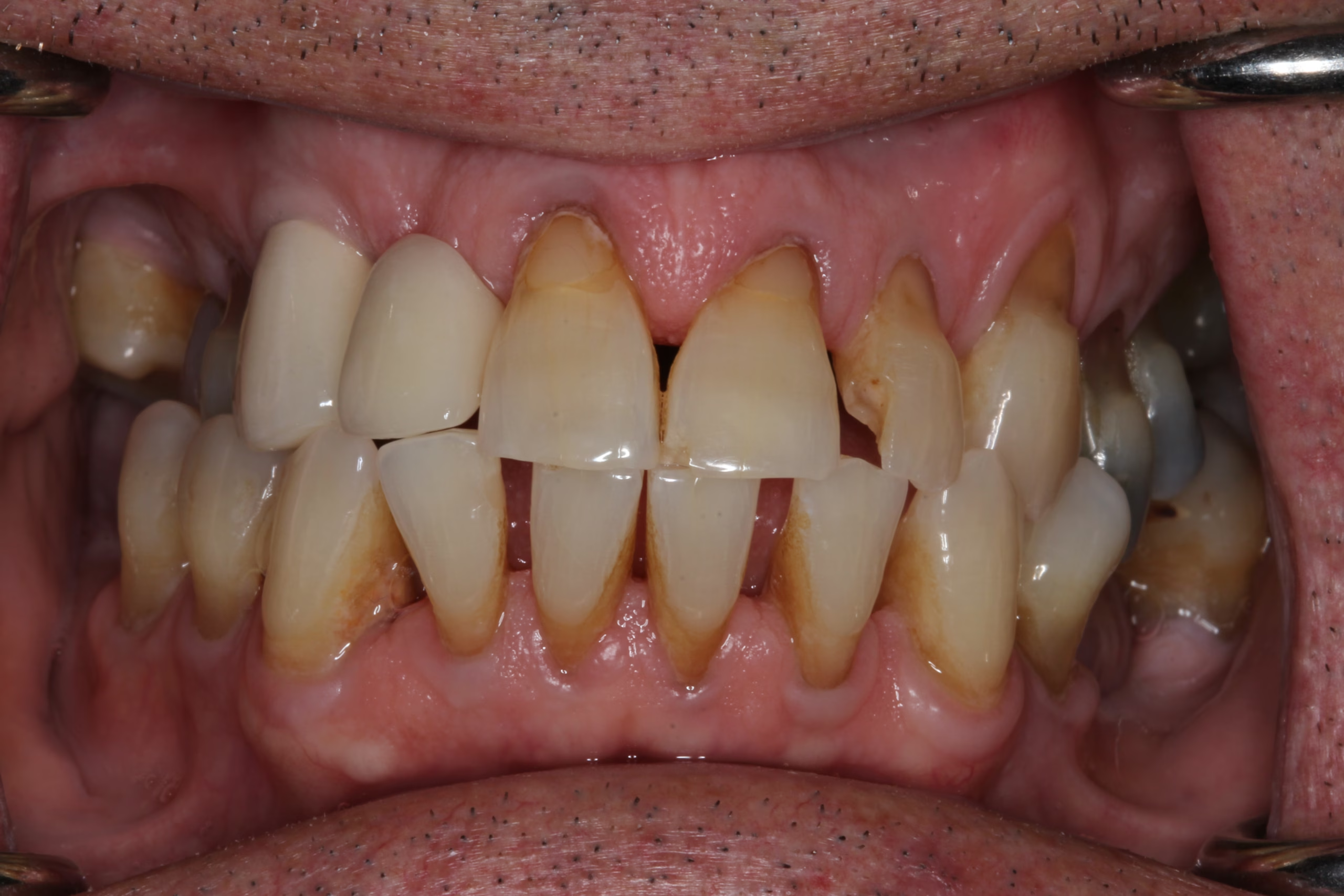
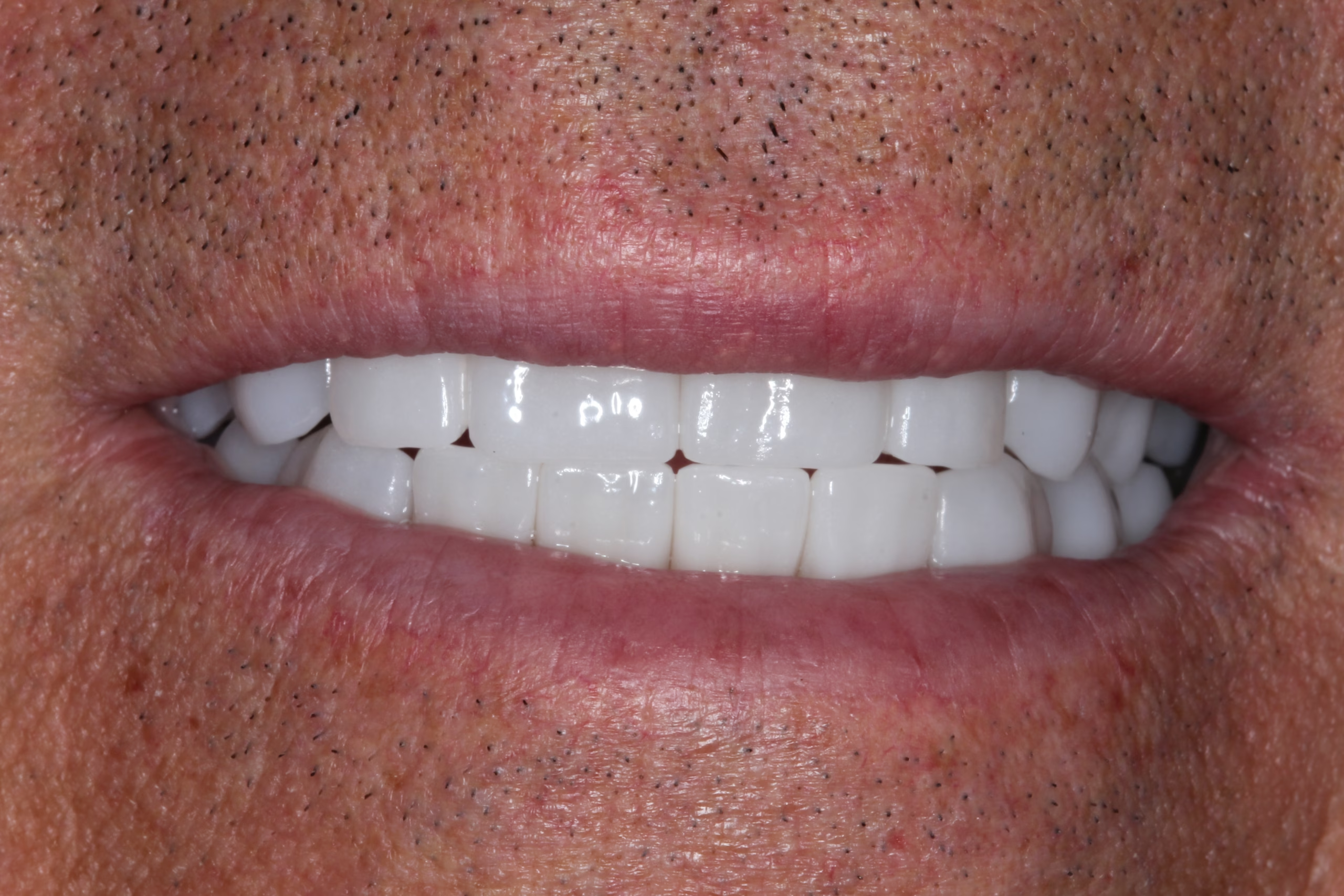
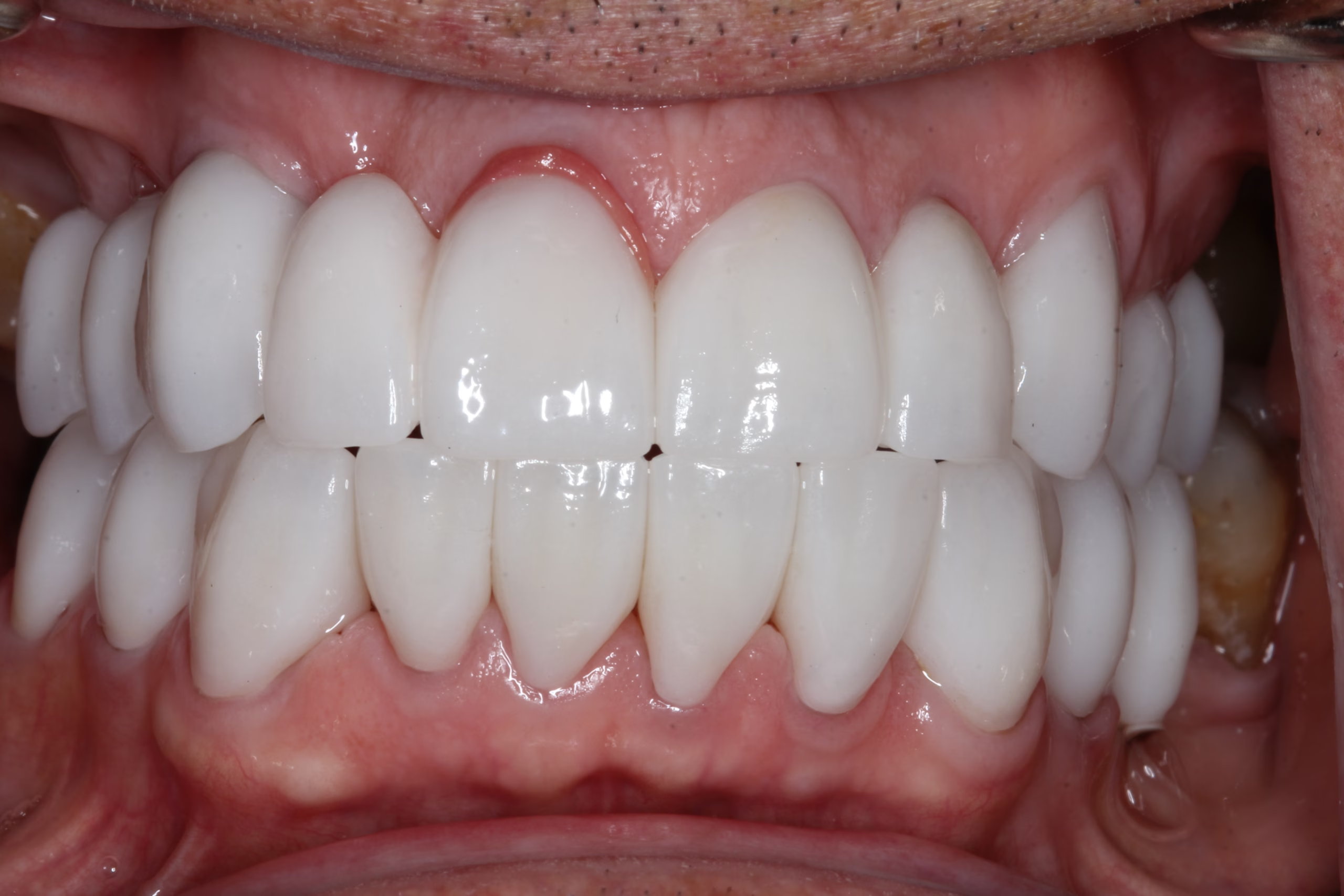
Book AppointmentCall 01704 871743WhatsApp UsThis transformation included clear ‘ICE’ braces, tooth whitening and porcelain veneers to create a bright, even smile.

“I'm absolutely over the moon with my new smile. The team at Azure Dental were amazing from start to finish.”
This Smile Makeover corrected unevenness, worn edges and discolouration using porcelain crown and bridgework.
The cost of a Smile Makeover in Liverpool varies depending on whether your plan includes teeth whitening, composite bonding, porcelain veneers or Invisalign. Many patients combine their Smile Makeover Liverpool plan with treatments such as professional teeth whitening, porcelain veneers and composite veneers.
Every treatment plan is personalised, and patients receive a full digital preview before committing to treatment. Furthermore, flexible payment plans and 0% finance options make Smile Makeover Liverpool treatment accessible for a wide range of budgets.
Porcelain veneers enhance the visible surfaces of the teeth, whereas a Smile Makeover may include bonding, whitening, veneers, Invisalign or gum contouring. For further detail, our porcelain veneers Liverpool page covers material choices and real cases.
Azure Dental delivers natural-looking cosmetic results using digital photography, facial analysis and advanced composite and porcelain techniques. As a leading cosmetic dentist in Liverpool, we use precision workflows to create long-lasting results.
Furthermore, our personalised approach ensures every Smile Makeover Liverpool patient receives a treatment plan tailored to their goals.
We regularly treat anxious patients seeking cosmetic dentistry. Our gentle techniques and optional sedation ensure a calm experience during your Smile Makeover Liverpool journey. Learn more on our Nervous Patients page.
Digital Smile Design allows you to preview your new smile before treatment begins. Using 3D scanning and digital photography, we design natural proportions that fit your facial symmetry.
As a result, Digital Smile Design plays a vital role in achieving predictable outcomes during a Smile Makeover Liverpool treatment.
Additionally, many patients benefit from visible improvements in a single visit. In some cases, composite bonding and whitening can be completed the same day. As a result, these enhancements often form an important stage in a Smile Makeover Liverpool plan.
We offer a wide range of finance options, including 0% interest. This allows patients undergoing a Smile Makeover Liverpool to spread costs comfortably. This flexible approach makes planning treatment easier and more predictable.
These FAQs provide clear guidance for anyone researching a Smile Makeover Liverpool. We’ve also included helpful links to related treatments such as composite bonding and digital dentistry.
Costs vary based on whitening, bonding, veneers or Invisalign.
Treatments may include whitening, veneers, Invisalign, bonding or DSD.
Bonding can be one day; veneers 1–2 weeks; Invisalign several months.
Yes — Digital Smile Design allows accurate previews.
No — we specialise in pain-free cosmetic dentistry.
Porcelain veneers last 10–15 years.
Veneers treat fronts of teeth; Smile Makeovers combine treatments.
Bonding is cost-effective; veneers last longer.
Yes — gentle care and sedation available.
Yes — flexible plans available.
Yes — bonding or veneers can correct damage.
Yes — digitally designed, natural outcomes.
Often possible with bonding and whitening.
Yes — DSD ensures harmony with facial features.
Yes — often the first stage of a Smile Makeover.
No — treatment planning ensures proper function.
For personalised Smile Makeover Liverpool treatment plans, we’re here to help.
From our podcast Partners in Your Dental Health.
Host 1: You know, the modern multi-billion pound cosmetic dentistry industry didn't actually start out in some sterile high-tech medical clinic. It was um it was actually invented as an emergency movie prop.
Host 2: Yeah, a literal prop.
Host 1: Right. So imagine it. It's 1920s Hollywood. The invention of the close-up shot was suddenly putting actors' faces on these massive silver screens, and it was sort of ruining the romantic illusion, to be honest.
Host 2: Oh, entirely. Because these incredibly glamorous stars had, well, terrible teeth.
Host 1: Exactly.
Host 2: The studios were in full panic mode. I mean, you had these legendary romantic leads looking absolutely incredible from a distance. But the moment the director yelled for a tight shot, the audience was confronted with, you know, heavily stained damaged teeth magnified to 20 feet high.
Host 1: Which is terrible.
Host 2: There was massive commercial liability. Right. And that sheer cinematic desperation birthed what we now casually refer to as the Hollywood smile. Welcome to the deep dive.
Host 1: Today we're cutting through all that social media noise to look at what a Hollywood smile actually means in the modern era. We'll be tracing its surprisingly cinematic history, breaking down the uh the incredible medical reality of the procedure, and really looking at the delicate artistry involved. Absolutely. And to ground this in reality, we are looking at the modern, gentle, dentist-led approach utilised by Azure Dental. They're a brilliant clinic based over in the Formby and Liverpool area. Their clinical insights give us a really fantastic window into how this is actually done today.
Host 2: But before we jump in, we should probably establish the ground rules for you, the listener. We are exploring some deeply fascinating dental science and history today, but you know, this is purely educational.
Host 1: Right, general information.
Host 2: Exactly. General information, not personal dental advice. We aren't here to promise perfect results or push a treatment on anyone. If you find yourself curious about upgrading your own smile, the absolute smartest thing you can do is book a professional consultation to get guidance that's tailored to your unique biology.
Host 1: Spot on. So let's go back to these 1920s studio executives panicking over their actors' teeth. Because long before public health warnings, most of these silent film and early talkie stars smoked constantly, didn't they?
Host 2: Oh, constantly. And drank heavily.
Host 1: Right. So they needed an immediate visual fix that didn't involve, you know, years of orthodontics.
Host 2: Which is where a rather inventive Beverly Hills dentist named Dr. Charles Pincus steps into the picture. The studios essentially handed him an impossible task. They said, make these actors look flawless on camera by tomorrow.
Host 1: No pressure.
Host 2: Right. He realised he couldn't fix the underlying health issues that quickly, so he just decided to mask them. He invented the very first early porcelain veneers.
Host 1: See, I always pictured early cosmetic dentistry as just um intense bleaching or something, but he actually built physical covers for the tea. How did he even get them to stay on?
Host 2: That is the most fascinating part of his invention, actually. He would bake these thin pieces of porcelain to match the shapes of the actor's upper teeth. But because modern dental bonding agents were decades away from being invented, he had to temporarily stick them onto the actor's natural teeth using uh denture adhesive powder.
Host 1: Wait, really? Denture powder?
Host 2: Yes.
Host 1: So these were essentially just mouth wardrobe. I mean, they were quite literally movie props. You glue them on for the big kissing scene, the director yells cut, and the actor probably has to pop them off just to eat a sandwich without swallowing them.
Host 2: Exactly that. They served absolutely no long-term functional purpose. They were clunky, they were fragile, and they were designed exclusively to survive the heat of the studio lights for a few hours at a time. Wow. Yeah, they couldn't withstand the biting forces of a regular meal. But, you know, they achieved their goal. On that silver screen, the actors looked radiant, healthy, and just flawlessly symmetrical.
Host 1: Which creates this really fascinating cultural ripple effect. Because the public goes to the cinema, they sit in the dark, they look up at these impossibly perfect smiles, and they assume that's what health and beauty naturally look like.
Host 2: Yeah, they want that aesthetic for themselves.
Host 1: But if the original Hollywood smile was just a cumbersome, temporary clip-on-cover, how does that desire transform into the permanent medical procedures that everyday people are, you know, walking into clinics for today?
Host 2: Well, consumer demand is a powerful force for innovation. The desire for that cinematic perfection just never faded. In fact, it amplified as movies gave way to television and magazines.
Host 1: Of course.
Host 2: So public pressure forced the dental industry to bridge the gap between temporary cinematic illusion and daily human existence. Over the decades, researchers had to develop entirely new chemical bonding agents that could adhere porcelain to tooth enamel permanently.
Host 1: Which is a huge leap.
Host 2: Massive. They had to engineer ceramics that could mimic the look of natural teeth, but also survive the crushing forces of human jaws chewing food over decades.
Host 1: So the medical technology literally had to catch up to the aesthetic ideal that Hollywood had artificially created. Which brings us to the reality of clinics like Azure Dental today. When we talk about a Hollywood smile now, we are light years away from Dr. Pincus' temporary props, aren't we?
Host 2: Oh, completely. We are talking about a comprehensive biological makeover. The term Hollywood smile today functions more as an umbrella concept. It isn't a single product sitting on a shelf.
Host 1: Right.
Host 2: It refers to a bespoke smile makeover designed to harmonize the teeth. So depending on where a patient is starting from, that makeover might involve orthodontics to align the bite. It might involve dental crowns for severely damaged teeth or, you know, professional whitening. But the cornerstone of those dramatic transformations people usually associate with the term remains the modern veneer.
Host 1: Let's address the whitening aspect first, actually, because I think a lot of people just assume you can achieve that flawless cinematic look simply by using a heavy-duty bleaching gel.
Host 2: Yeah, a lot of people think that.
Host 1: But clinics utilise professional, light activated systems that are, well, they're light years ahead of what you buy in a pharmacy.
Host 2: They are. Professional whitening is often a foundational step. And for some patients, it's really all they need to feel confident. The modern gels penetrate the outer layer of the tooth to break down years of surface stains from coffee, tea, and just everyday life.
Host 1: , but whitening hits a very strict biological ceiling, doesn't it?
Host 2: It does, yeah. Whitening only alters the shade of your existing enamel. It cannot fix structural issues.
Host 1: Right.
Host 2: So if you have deep intrinsic stains, perhaps the inner structure of a tooth died after a sports injury, or you were exposed to certain antibiotics as a child that turned the dentine grey bleaching gel cannot fix that. It just won't touch it. Exactly. Furthermore, if your teeth are heavily worn down from years of nocturnal grinding, or if they're chipped and fractured, whitening just gives you a brighter broken tooth.
Host 1: So if chemical whitening can't overcome those structural limitations, you have to actually rebuild the tooth. You have to put something over it. And the clinical insights highlight two main materials used for modern veneers, which are composite and porcelain. And the difference in how they are crafted is really quite stark.
Host 2: It really comes down to where and how the artistry happens. A composite veneer utilises a specialised tooth-coloured resin.
Host 1: Okay.
Host 2: The dentist applies this pliable material directly onto your tooth while you're sitting there in the chair. They sculpt it, they shape it, and harden it with a high-intensity curing light and then polish it to a shine.
Host 1: Almost like a sculptor working with clay directly on a canvas.
Host 2: Yes, very much so.
Host 1: But porcelain is an entirely different beast, isn't it?
Host 2: It is. Porcelain veneers are custom crafted completely outside the mouth. The dentist takes highly detailed digital 3D scans or physical impressions of your teeth and sends them to a dedicated dental laboratory. Oh wow. Yeah. And there a master ceramic technician takes over. This technician painstakingly layers different opacities, shades, and textures of glass-like ceramic, firing it in a specialised kiln to create this durable ultra-thin shield that perfectly mimics human anatomy.
Host 1: So if we look at this from an investment standpoint, choosing a composite veneer is somewhat like buying a very high-quality off-the-rack suit that is tailored to fit you in the shop. Right. But opting for porcelain is like going to London and getting a bespoke Savile Row suit where a master craftsman is building it from scratch based on your exact measurements.
Host 2: That captures the difference perfectly, actually. The porcelain route involves a secondary highly skilled artist in the laboratory. That ceramic technician is attempting to recreate the microscopic ways natural light passes through human enamel, which is just an incredibly labor-intensive process.
Host 1: I can imagine.
Host 2: Because of this, composite veneers tend to be more financially accessible, while porcelain requires a more significant investment.
Host 1: But by offering both of these options, modern dentistry has somewhat democratized the Hollywood smile. Yeah. You don't actually have to be a studio executive to access this level of care anymore.
Host 2: Exactly. It provides multiple entry points. Whether a patient in Merseyside opts for the chairside composite or the laboratory crafted porcelain, the modern materials are designed to look natural and function seamlessly in daily life.
Host 1: Hold on though. We need to talk about the physical reality of getting these materials attached. Because this isn't a reversible booty treatment like getting your hair dyed or something.
Host 2: No, it's not.
Host 1: I see this dangerously casual narrative on social media where people talk about getting veneers like they're just, I don't know, sticking beautiful porcelain shields onto their teeth like press-on nails. But to make a veneer sit properly, they actually have to shave down your natural tooth, don't they?
Host 2: We absolutely have to address that head-on because you were touching on the most critical biological factor of this entire process. Yes, for a traditional veneer to be fitted correctly, the dentist must remove a very thin layer of your natural, healthy tooth enamel.
Host 1: But enamel doesn't grow back.
Host 2: No, it doesn't.
Host 1: Once it's gone, it is gone forever. So you are making a permanent, irreversible alteration to the biological structure of your face.
Host 2: This is a serious medical commitment. I mean, if you simply glued a layer of porcelain directly over an unprepared tooth, the end result would look incredibly bulky.
Host 1: Oh, I see.
Host 2: The tooth would feel thick against your lips, it could alter your speech, and crucially, it would create a small ledge at the gum line where the porcelain meets the natural tooth.
Host 1: And I'm guessing that ledge is bad news.
Host 2: Very bad news. That ledge becomes a trap for plaque and bacteria, leading to chronic gum disease.
Host 1: So the preparation creates a flush surface.
Host 2: Precisely. By removing a fraction of a millimetre of enamel, the dentist creates space for the veneer to sit perfectly flush with the surrounding gum tissue, ensuring it looks natural and remains easy to clean.
Host 1: That makes sense.
Host 2: Furthermore, that slight etching of the enamel provides the ideal surface for the chemical bonding agents to lock onto, ensuring the veneer doesn't just pop off when you bite into an apple. And you know, they use local anaesthetic for this, which is designed to make the preparation comfortable.
Host 1: So if someone is listening to this, maybe they are a bit nervous about dental work, which is totally fair, and they are contemplating this procedure. They really need to understand they're committing to having veneers or eventually crowns for the rest of their life.
Host 2: A Hollywood smile is never a casual purchase. It requires deliberate, informed consideration.
Host 1: Absolutely.
Host 2: This is why a reputable clinic like Azure Dental emphasises their thorough consultation process. It's a gentle, dentist-led approach and giving you all the facts. A responsible clinician will sit down with you and conduct a detailed risk-benefit analysis.
Host 1: Right, because they're always trade-offs.
Host 2: Exactly. The patient has to carefully weigh the functional benefits, perhaps restoring teeth that have been shattered by trauma, or rebuilding a bite ruined by acid erosion against the permanent structural changes being made.
Host 1: It has to be an informed decision. And that level of bespoke care means the timeline and the investment are completely individualized, aren't they? You can't just look up a standard price online because every single mouth is completely different.
Host 2: That's spot on.
Host 1: Like one person might just need some gentle whitening and a single composite veneer on a tooth they chipped on a coffee mug. But another patient might need a full mouth reconstruction involving months of invisible braces, followed by gum contouring, followed by a dozen bespoke porcelain veneers.
Host 2: The clinical reality dictates the scope of the work. This is exactly why clinics don't publish a single flat rate for a Hollywood smile. The financial investment varies drastically based on the complexity of the underlying biology and the materials chosen.
Host 1: So you really just have to ask.
Host 2: Right. The only way to understand what it entails for your specific situation is to check the clinic's fees page and go in for a professional consultation.
Host 1: Okay, so assuming a patient has gone through that process, they've had the consultation, they understand the biological commitment, they undergo the careful enamel preparation, and they make the investment. The final and arguably most important question is about the end aesthetic result. Because while we've been talking about the Hollywood smile as an ideal, a lot of people are actually terrified of the chiclet stereotype.
Host 2: Oh, the chiclet stereotype is a very vivid, very prevalent fear in cosmetic dentistry. unknown 13:17 Trevor Burrus, Jr.
Host 1: You see it constantly, particularly in modern sports or on reality television. We are talking about teeth that are unnaturally blinding, perfectly square, and so opaque white that they look like they could, I don't know, glow in the dark. Yes. It looks like a piano key has been glued to their gums. If you undergo this permanent procedure, are you destined to walk around with high beam headlights in your mouth?
Host 2: This touches on the crucial difference between what dental technology can achieve and what a skilled clinician should do.
Host 1: Right.
Host 2: Modern clinics are very explicit about this. You do not have to get those bright white opaque squares. The shape, the style, the translucency, and the colour are entirely customisable to the individual patient.
Host 1: It reminds me of using the photo editing software on a smartphone. You take a picture and you have those little sliders for contrast, saturation, and brightness. Right. The software gives you the ability to crank the brightness slider all the way up to a hundred percent. But if you actually do that, you blast out all the shadows and you ruin the picture. Just because you can make something aggressively bright doesn't mean it looks good.
Host 2: Exactly. When you push that brightness to 100%, you lose all the texture, the nuance, and the depth. The image becomes artificial. The exact same optical principles apply to cosmetic dentistry. Really? Oh, absolutely. If you ask a ceramic technician to make a veneer the brightest possible shade of opaque white, it will look fake because natural teeth are not monochromatic.
Host 1: Natural teeth have layers, right?
Host 2: They do. A natural tooth consists of a yellowish inner core called dentine, covered by an outer layer of enamel that is actually slightly translucent, a bit like frosted glass.
Host 1: Oh, I see.
Host 2: Toward the edges of your biting teeth, there's often no dentine at all, just pure translucent enamel that allows light to pass through it, creating this really delicate halo effect.
Host 1: So the true artistry of a modern Hollywood smile actually lies in recreating those subtle imperfections. It's about making it look like you haven't had work done at all.
Host 2: The highest level of this craft is virtually invisible. The goal of a skilled dentist and a master ceramist isn't to give a patient in Crosby or Southport a one-size-fits-all copy and paste celebrity smile. It's about harmonious enhancement.
Host 1: So what does harmonious enhancement actually look like in the chair? How do they design that?
Host 2: Well, it involves looking at the entire canvas of the face, not just the mouth. The dentist considers the symmetry of your facial features, the shape of your lips, and even your natural skin tone.
Host 1: That makes a lot of sense.
Host 2: Yeah. A shade of white that looks brilliant and natural on someone with a very dark complexion might look aggressively artificial and washed out on someone with a very pale complexion.
Host 1: You'd want to choose a colour that complements the whites of your eyes rather than, you know, competing with them for attention.
Host 2: Exactly. The ceramist will incorporate slight irregularities. They might add a hint of warmth at the gum line, or materially build up that translucent edge I mentioned, so that when the patient walks outside into the sunlight, the porcelain interacts with the light exactly the way biological enamel does. Oh. The goal is for a flawless appearance that feels entirely native to your face. You want friends to notice that you look incredibly refreshed and confident without being able to pinpoint exactly why.
Host 1: You want the smile to arrive in the room at the same time you do, not five minutes beforehand.
Host 2: Spot on. The smile must belong to the person wearing it.
Host 1: It is just a remarkable convergence of rigorous medical science and deeply subjective, delicate artistry.
Host 2: It really is.
Host 1: We have covered an immense amount of ground today. I mean, we started in the frantic, smoke-filled studios of 1920s Hollywood, looking at fragile, temporary ceramic props designed to salvage the romantic illusions of silent film stars.
Host 2: A purely cinematic bandage.
Host 1: Yeah. And we traced how that intense consumer desire forced that illusion to become a reality. We've seen how it evolved into the sophisticated, bespoke medical procedures offered today, procedures that require master lab technicians, careful structural planning, and irreversible permanent alterations to your natural biology. It is a massive leap from the superficial to the deeply structural.
Host 2: It truly highlights the incredible lengths dental technology has gone to meet our aesthetic desires, while also underlining the gravity of the medical choices we now have at our disposal.
Host 1: Which leaves us with a final thought I want you, the listener, to chew on. Think about this. Our natural teeth are essentially a biological visual diary of our lives. They show our age, they reflect our diet, they bear the subtle chips and scars of our accidents, our stress, and our history. When we choose to permanently overwrite that biological history with a flawless, custom-designed ceramic smile, what does that say about our relationship with authenticity?
Host 2: That's a big question.
Host 1: Are we just utilising modern medicine to become the most confident versions of ourselves, or are we actively trying to edit out the visible evidence of our own history?
Host 2: It is a profound question. By changing the permanent physical markers of our lived experience to achieve an aesthetic ideal, we are making a very powerful statement about how we want the world to perceive us, and perhaps how we wish to perceive ourselves.
Host 1: It is definitely something to ponder the next time you find yourself scrutinizing your reflection in the mirror. And that brings us to the close of our journey today. As a quick reminder, this deep dive was created purely for educational purposes to explore the fascinating mechanics behind a massive cultural phenomenon.
Host 2: Yes. We hope it has equipped you with a clearer, much more grounded understanding of the science, the artistry, and the biological reality of what a modern smile makeover actually entails.
Host 1: And if you happen to be located in the Merseyside area, whether you are in Formby, Liverpool, Southport, or Crosby, and you find yourself genuinely considering taking the leap to restore or enhance your own smile, the absolute smartest first step is to gather information tailored specifically to you. Absolutely. You can reach out to the team at Azure Dental to book a consultation. Their gentle, dentist led approach can provide the specific tailored guidance that a general deep dive simply cannot. Until next time, keep asking the big questions.
From our podcast Partners in Your Dental Health.
Host 2: Did you know that um when you smile, your brain is doing like a lot more than just pulling your lips back?
Host 1: Oh, absolutely. It's a massive process.
Host 2: Yeah. There is this incredibly complex biomechanical feedback loop going on. So if you're self-conscious about your teeth, your brain actually subconsciously recruits completely different muscle groups.
Host 1: Right. It's trying to suppress that smile.
Host 2: Exactly. You develop this sort of guarded facial posture, you know, and it changes how you speak, how you laugh.
Host 1: And even how people perceive your confidence. Yeah.
Host 2: It really does. It's fascinating because it highlights that our teeth aren't just, well, cosmetic accessories. They're deeply tied to our psychology and our physiology.
Host 1: That is a brilliant place to start. A smile is a highly dynamic functional system. I mean, when people think about cosmetic dentistry, they tend to focus purely on the surface aesthetics.
Host 2: Like just making things whiter or straighter.
Host 1: Exactly. But if you ignore the mechanics of how the mouth actually operates, any cosmetic work you do is, well, it's destined to fail. The biology really has to dictate the design.
Host 2: Which is exactly why we are pulling apart the mechanics of this today. So welcome to this deep dive. Today we are analysing clinical guidelines and patient chair protocols provided by Azure Dental.
Host 1: And our mission today is to demystify things like smile makeovers and porcelain veneers, right?
Host 2: Spot on. If you're listening from Formby, Liverpool, Southport, or Crosby, we're going to break down how these treatments actually function, who they suit, and the biological realities of the process.
Host 1: We want to look at the how and the why, not just the what.
Host 2: Right. But before we get into the mechanisms of all this, we need to set some clear boundaries on what this discussion is and isn't.
Host 1: Yes, that's crucial. So the data we're looking at from Azure Dental provides a framework for general information. This deep dive is designed to help you explore your options logically.
Host 2: But it is not personal dental advice.
Host 1: Definitely not. I mean, human biology varies wildly. What functions perfectly for one jaw structure might be entirely wrong for another.
Host 2: Yeah, so we'll explore what these modern materials and techniques can achieve, but we are not promising specific clinical outcomes here.
Host 1: Exactly. Anyone considering a change to their smile should always book a professional consultation to get advice tailored to their specific anatomy.
Host 2: Absolutely. No guarantees, just an exploration of the science. And looking through Azure Dental's approach, a major theme jumps out at me.
Host 1: So what's that?
Host 2: It's the shift away from aggressive, rushed cosmetic work. They really lean towards conservative, dentist-led care that prioritises natural harmony.
Host 1: Which is so important.
Host 2: Yeah. So let's start with this umbrella term, the smile makeover. I mean, it sounds a bit like a reality TV buzzword, doesn't it?
Host 1: It really does. People seem to think it's a single product you just buy off the shelf.
Host 2: Right, like ordering a number four off a menu.
Host 1: Exactly. And that assumption causes a lot of confusion. A smile makeover is entirely bespoke. It's a strategic combination of different clinical treatments sequenced together.
Host 2: So it's more of an architectural plan than a product.
Host 1: That's a perfect way to put it. Depending on your specific enamel condition, bite alignment, and gum health, the program might involve professional teeth whitening to alter the base shade.
Host 2: Okay. Or maybe composite bonding for chipped edges.
Host 1: Yes. Or clear aligners, like in this align, to move the roots into the proper position. Or, of course, porcelain veneers to redefine the surface. It's a tailored plan. Okay.
Host 2: So if it's an architectural plan, how do you draft the blueprint? I mean, you can't just look at someone's mouth and guess where the teeth should go.
Host 1: Well, you shouldn't, anyway.
Host 2: Right. If you build a house without surveying the land, the foundation cracks. So how do dentists actually map the topography of the smile?
Host 1: They use a protocol called digital smile design or DSD.
Host 2: Oh, I've heard of this.
Host 1: Yeah, the old method relied heavily on alginate moulds, you know, that awful putty you bite into.
Host 2: Ugh, the worse. It always makes you gag.
Host 1: Exactly. And it involved a lot of clinical guesswork. But the modern approach, which Azure Dental uses, relies on optical data.
Host 2: So like 3D standing.
Host 1: Yes. The clinical team uses interoral scanners that capture thousands of microscopic images per second. They stitch them together to create a highly accurate 3D topographical map of the teeth and gums.
Host 2: But wait, a 3D map of teeth is just sort of floating in digital space, right? A smile doesn't happen in a vacuum.
Host 1: No, it interacts with the lips, the nose, the eyes.
Host 2: Right. So how do they account for the rest of your face?
Host 1: That is actually the most critical part of the DSD process. The clinical team integrates that 3D intraoral scan with high-resolution digital photography.
Host 2: Oh, wow.
Host 1: And sometimes even video of the patient speaking and laughing. They're looking for specific anatomical landmarks.
Host 2: Like what kind of landmarks?
Host 1: Well, they measure the interpupillary line, that's the invisible line between your eyes, to establish a horizontal plane. unknown 4:52 Oh.
Host 1: And they locate the facial midline.
Host 2: Okay, that makes sense.
Host 1: They also analyse the curve of your lower lip when you smile naturally. The edges of your upper teeth should ideally follow that exact curve.
Host 2: So they are essentially using the mathematical proportions of your own face to dictate the shape of the teeth.
Host 1: Yes.
Host 2: Rather than just, you know, pulling some generic Hollywood smile template from a database.
Host 1: Precisely the opposite of a template, yeah. If you put large, perfectly square teeth into a face with delicate tapered features, the brain instantly recognises that something is wrong.
Host 2: Even if you can't quite put your finger on why.
Host 1: Exactly. It just looks artificial. Digital smile design calculates natural harmony. And the really profound benefit for the patient is that this software generates a visual preview.
Host 2: Wait, so you can actually see what it's going to look like beforehand.
Host 1: Yes. You see the planned aesthetic outcome on a screen before any physical intervention even happens.
Host 2: Trevor Burrus That has to fundamentally change the psychology of sitting in the waiting room.
Host 1: Oh, completely.
Host 2: I mean, dental anxiety is so heavily rooted in a loss of control, right? And the fear of the unknown.
Host 1: Yes, absolutely.
Host 2: If you can literally look at a screen and see the destination, that takes a massive variable out of the equation.
Host 1: It lowers cortisol levels significantly. Azure Dental's guidelines place a huge emphasis on managing anxious patients. Moving at a gentle pace is part of that.
Host 2: And I think they offer optional dental sedation too for those who need it.
Host 1: They do, which is another great tool. But from a purely psychological standpoint, replacing the unknown with a collaborative visual plan is incredibly powerful.
Host 2: The patient shifts from being a passive subject to an active participant.
Host 1: Exactly. Now let's focus on one of the specific tools often used in those designs, porcelain veneers.
Host 2: Right, because we see the dramatic before and after photos everywhere on social media. But let's break down the material science. Sure. What exactly is a porcelain veneer mechanically speaking?
Host 1: At a microscopic level, a porcelain veneer is an ultra-thin shell of advanced ceramic. It's custom manufactured in a dental laboratory to fit over the facial or front-facing surface of a tooth.
Host 2: Okay.
Host 1: Its function is to modify the shape, the proportion, the surface texture, and the light reflecting properties of the tooth it covers.
Host 2: Alright, but here's where my internal alarm bells go off a bit. You say it fits over the tooth.
Host 1: Yes.
Host 2: That sounds a bit like um taking a crack damp wall in a house and just slapping a nice layer of fresh wallpaper over it. Isn't a veneer just a cosmetic cover-up that hides underlying issues?
Host 1: That is the trap a lot of unregulated or rushed cosmetic work falls into, actually. And it's a disaster waiting to happen.
Host 2: I can imagine.
Host 1: Azure dental's clinical protocols strictly forbid that approach. A veneer is never a band-aid. Right. If you bond ceramic over active decay or inflamed gums, you just accelerate the disease process. Before a veneer is even considered, the foundation must be clinically sound.
Host 2: So they fix the damn wall before they wallpaper?
Host 1: Exactly.
Host 2: Yeah.
Host 1: But beyond disease, the most critical assessment is biomechanical. The dentist has to evaluate the occlusion.
Host 2: The occlusion.
Host 1: Yes, that's how your upper and lower teeth meet and slide against each other.
Host 2: Why is the bite so critical though? If the veneer is just on the front of the tooth, what does chewing have to do with it?
Host 1: Well, think about the masseter muscle in your jaw. It is, pound for pound, the strongest muscle in the human body.
Host 2: Wow, really?
Host 1: Oh yeah. When you chew, you can generate upwards of 150 to 200 pounds of pressure.
Host 2: That is terrifying.
Host 1: It is. Ceramic is incredibly hard, but it's also brittle. So if your bite is misaligned and your lower teeth strike the edge of an upper ceramic veneer at the wrong angle, it just chips. Worse, that sheer force will cause the ceramic to shatter. The engineering of the mouth must support the cosmetic finish.
Host 2: So the angles have to be perfect so that the forces of chewing are distributed safely.
Host 1: Exactly. It's pure physics.
Host 2: That makes total sense. So if we know they have to be so carefully engineered, who are they actually for? We need to look at suitability.
Host 1: Right. Because jumping straight to a ceramic shell seems extreme if there's a simpler effects.
Host 2: Exactly. Let me throw an analogy at you.
Host 1: Go for it.
Host 2: If I have this heavy, solid oak front door and the brass handle gets a tiny scratch on it, ripping out the entire door to install a new one is absurd.
Host 1: Very absurd.
Host 2: If you just polish the handle. So where does a full veneer cross the line into being overkill?
Host 1: Your oak door analogy is a perfect distillation of conservative dentistry, which is the absolute cornerstone of modern clinical practice.
Host 2: Okay, good to know I'm on the right track.
Host 1: The primary goal is always to preserve healthy biological tissue. Enamel is precious. Once it's gone, your body does not grow it back. Right. So if a patient's only complaint is that their teeth are stained or yellowed, jumping to veneers is terrible clinical judgment.
Host 2: In that scenario, professional teeth whitening is the better route.
Host 1: Yes, it's the appropriate conservative intervention.
Host 2: But how does professional whitening actually work? Is it just like bleaching the surface?
Host 1: It's a chemical process called oxidation. The active ingredients, usually hydrogen and peroxide or carbonide peroxide, penetrate the microscopic pores in the enamel.
Host 2: Okay.
Host 1: They break the molecular bonds of the chromogens. Those are the pigmented molecules causing the stain within the dentine layer underneath.
Host 2: So you're altering the intrinsic colour of the tooth without removing a single microscopic layer of structure.
Host 1: Exactly. No drills, no structural loss, just chemistry.
Host 2: Brilliant. And what about that scratched brass handle, like a small physical defect?
Host 1: If you have an otherwise perfectly healthy tooth with just a minor chip on the edge, add your dental's protocols point toward composite bonding.
Host 2: Right. I've heard of that. How does it work?
Host 1: It involves applying a putty-like tooth-coloured composite resin directly to the defect. The dentist uses a mild acid to create microscopic rough patches on the enamel.
Host 2: To give it something to grip onto. Exactly.
Host 1: They apply a bonding agent and then shape the resin to seamlessly rebuild the missing edge. It's cured instantly with a specific wavelength of blue light.
Host 2: And that's pretty quick, right?
Host 1: Very quick. It's highly conservative, usually completed in a single visit, and highly cost effective compared to laboratory-made ceramics.
Host 2: So you're treating the root cause rather than just applying a blanket solution.
Host 1: Yes.
Host 2: And I imagine if the issue is that the teeth are physically crowded or overlapping, just sticking veneers on top of them would look terrible.
Host 1: You'd end up with really thick, bulky looking teeth. Exactly. If the roots are in the wrong place, the teeth are in the wrong place. In cases of crowding or misalignment, moving the teeth through orthodontics-like invisalign clear aligners is the biologically sound approach.
Host 2: And once they're straight, you might not even need veneers.
Host 1: Precisely. The clinical philosophy is clear. The most invasive treatment should be the last resort, not the starting point.
Host 2: Okay, let's follow the timeline then. Say a patient has the consultation at Azure Bentel. Okay. They're cleared of underlying issues, their bite is analysed, and it's determined that yes, to achieve their goals, porcelain veneers are the correct path.
Host 1: Right.
Host 2: How does a digital scan on a screen become physical ceramic in the mouth?
Host 1: It is a meticulously paced, multi-stage protocol. We've already discussed the first two stages, which are the SMILE assessment and the planning and digital design phase.
Host 2: Yep, the 3D map and the preview.
Host 1: Exactly. The critical transition from digital to physical happens in stage three: preparation and temporaries.
Host 2: Preparation. That's the scary word. That means the drill.
Host 1: It does.
Host 2: If enamel is incredibly thin to begin with, what, maybe two millimetres thick on a front tooth?
Host 1: Roughly, yes.
Host 2: How much are we talking about removing?
Host 1: A microscopically precise amount. Typically between 0.3 and 0.5 millimetres.
Host 2: Okay, give me the soul for that.
Host 1: It's roughly the thickness of a fingernail or a contact lens.
Host 2: Oh, that is tiny. But why remove any at all? Why not just stick the ceramic straight on top?
Host 1: For two vital reasons. First, aesthetics. If you add half a millimetre of ceramic to a tooth without making space for it, the tooth will look visibly thicker.
Host 2: Ah, the bulky look again.
Host 1: Right. And second, and more importantly, periodontal health. The veneer needs to sit perfectly flush with the root surface.
Host 2: So it has to be seamless.
Host 1: Yes. If you don't create a microscopic ledge, which is called a chamfer margin for the ceramic to drop into, you create a tiny physical step or overhang at the gum line.
Host 2: And I'm guessing that step is a bad thing.
Host 1: Very bad. That overhang acts as a trap for plaque and bacteria, leading to chronic gum inflammation. The preparation ensures a seamless hygienic transition.
Host 2: So the tooth is prepared. Does the patient just walk around for two weeks with shaved-down teeth waiting for the lab to finish?
Host 1: Not at all. This is where the temporaries come in. Before the patient leaves that preparation appointment, the dentist creates temporary acrylic veneers.
Host 2: Based on the 3D design from earlier.
Host 1: Based exactly on that 3D digital design, yes.
Host 2: Okay, so they serve as physical protection.
Host 1: Protection, yes, but their secondary function is far more interesting. They act as a physical prototype, a test drive.
Host 2: Oh, and I like that.
Host 1: The digital design is theory, the temporaries are reality. The patient goes home and actually lives with this new shape. They test the phonetics.
Host 2: Phonetics, like how they speak.
Host 1: Exactly. For example, when you make F or V sounds, the edges of your upper front teeth must lightly touch the wet, dry line of your lower lip.
Host 2: Oh wow. I'm literally doing that right now.
Host 1: Everyone does when they hear that. Sure. But if the temporary teeth are designed even a fraction of a millimetre too long, the patient will lisp.
Host 2: That is fascinating. You are essentially calibrating the teeth to the patient's speech patterns.
Host 1: Exactly. And the patient can report back, you know, they might say, they look great, but my speech feels slightly off, or I feel like they're too dominant when I smile.
Host 2: And can they fix that easily?
Host 1: Very easily. The dentist can adjust the acrylic temporaries right there in the chair. Once the temporaries are perfect in terms of speech, bite, and aesthetics, a new skein is taken.
Host 2: And send to the lab.
Host 1: Sent to the ceramics, yes. The lab then copies that exact tested blueprint to craft the final porcelain.
Host 2: Which pretty much eliminates the risk of an unpredictable result. Exactly. Which brings us to the final stage: the fitting.
Host 1: Stage four is the final fit and review. The temporaries are removed, and the final ceramic restorations are tried in.
Host 2: What are they looking for during the try-in?
Host 1: The clinical team checks the margins under magnification to ensure there is no gap for bacteria. They verify the bite forces are balanced perfectly using articulating paper.
Host 2: Okay.
Host 1: And only when everything is clinically sound is the ceramic permanently bonded using a specialised resin cement.
Host 2: It becomes incredibly obvious why this is not a same-day process. I mean, you can't rush biological testing.
Host 1: You really can't.
Host 2: We've all seen cases where someone flew abroad, got their teeth done in 24 hours, and came back looking like they have opaque, flat piano keys in their mouth.
Host 1: It's unfortunate. True aesthetic quality requires time. Human enamel is not one solid colour, it has a gradient.
Host 2: Right. It's a bit see-through at the bottom.
Host 1: Exactly. It's more opaque near the gum line and becomes highly translucent near the biting edge, allowing light to pass through.
Host 2: So how does a lab replicate that?
Host 1: A master ceramist builds a veneer by hand, baking microscopic layers of different porcelain powders and a vacuum furnace to mimic that natural optical depth.
Host 2: You definitely cannot achieve that level of vitality in a rushed single-day milling machine.
Host 1: No, you cannot.
Host 2: Well, let's transition from the clinical environment to long-term reality. Okay. You walk out of Azure Dental, the anaesthetic wears off, you have your new smile. What does maintenance actually look like over the next decade? Are these restorations permanent?
Host 1: That is a crucial limitation to understand. Nothing in dentistry is truly permanent.
Host 2: Right?
Host 1: The human mouth is an incredibly hostile environment. It experiences massive temperature fluctuations, acidity, and immense mechanical stress.
Host 2: So how long do they realistically last?
Host 1: Well-planned, precisely bonded porcelain veneers are highly durable and can realistically function for 10 to 15 years, sometimes longer, but they will eventually need to be replaced.
Host 2: What dictates whether they last five years or 15 years?
Host 1: Patient behavior is a massive factor. We discussed bite forces earlier.
Host 2: If a patient suffers from bruxism, that's subconscious teeth grinding, right, usually at night.
Host 1: Exactly. If they grind their teeth, they are putting immense repetitive lateral forces on the ceramic.
Host 2: So how do you protect against that?
Host 1: Azure Dental will almost certainly prescribe a custom-made protective night guard for these patients. It absorbs that force and protects the ceramic from fracturing.
Host 2: Okay, that makes sense.
Host 1: And of course, oral hygiene. A veneer cannot get a cavity, but the natural tooth structure underneath and around it certainly can.
Host 2: Oh.
Host 1: If decay develops under the margin of a veneer, the whole restoration fails.
Host 2: Good to know. Let me ask a practical question about aesthetics, though.
Host 1: Go ahead.
Host 2: I rely on strong black coffee to get through the day. Five years from now, if my smile looks a bit dull, can I just apply a peroxide whitening gel to the porcelain?
Host 1: No. And this is a reality everyone must accept before treatment. Ceramic is an inert material. Okay. It does not possess the porous tubules that natural enamel has. Therefore, the oxidation process of bleaching has absolutely zero effect on it.
Host 2: So whatever shade you pick?
Host 1: The shade of ceramic you bond in on day one is the exact shade it will be on day 4,000.
Host 2: Wow. So it's essentially stain-proof. The coffee won't affect the veneer itself.
Host 1: The ceramic itself resists staining beautifully because its surface is highly glazed and impermeable. However, we have to look at the whole ecosystem.
Host 2: What do you mean?
Host 1: Plaque can build up around the edges, picking up stains. More importantly, the natural teeth adjacent to your veneers will continue to age and absorb stains normally.
Host 2: Ah, I see. So the new house stays pristine, but the neighborhood around it slowly goes downhill, which makes the whole street look mismatched.
Host 1: That is exactly the visual effect. This is why shade planning at the very beginning is so critical.
Host 2: You don't want a blindingly white veneer if your natural teeth are warmer.
Host 1: Exactly, because the contrast will become stark over time. It also reinforces why regular hygiene appointments are non-negotiable. You have to maintain the health and the shade of the natural teeth to support the aesthetic of the restorations.
Host 2: We have to touch on the investment aspect. Now, we aren't going to list specific prices because, as we've established, treating a single chip tooth is completely different from a comprehensive multitooth makeover.
Host 1: Very different, yes.
Host 2: But generally speaking, what is the patient actually funding?
Host 1: You are funding clinical expertise, extensive diagnostic planning time, and the highly skilled labor of laboratory technicians.
Host 2: Plus the materials, I assume.
Host 1: Yes. Premium ceramic materials and the bonding agents required for long-term predictability are significant investments. It's a highly complex biological and engineering service, not just a commodity.
Host 2: Right.
Host 1: However, Azure Dentals Literature notes that they offer flexible payment options and 0% finance plans.
Host 2: Oh, that's helpful.
Host 1: It is. It allows patients to spread the investment predictably, making high-quality, conservative care accessible without compromising on the clinical standards.
Host 2: That makes the whole process much more manageable. All right, let's pull all these threads together.
Host 1: Okay.
Host 2: A smile makeover at Azure Dental is fundamentally a bespoke, digitally planned sequence of treatments. It could be whitening, it could be conservative bonding, or it could be precision-engineered porcelain veneers.
Host 1: Exactly.
Host 2: The core philosophy we've extracted today is careful biological assessment, conservative preparation, and a rejection of rushed, artificial-looking trends in favor of natural harmony.
Host 1: And if we zoom out from the clinical details for a second, there is a fascinating concept I'd like to leave you to ponder.
Host 2: Oh, I love these. Let's hear it.
Host 1: We talked at the very beginning about how hiding your teeth rewires your facial muscles, right?
Host 2: Yes, the biofeedback loop.
Host 1: Well, neuroplasticity works in reverse, too.
Host 2: Yeah.
Host 1: When a patient receives a functional, harmonious new smile, it takes time for the brain to trust it.
Host 2: Because it's so used to hiding.
Host 1: Exactly. Yeah. For months you might still catch yourself covering your mouth when you laugh out of pure muscle memory. But eventually the brain recognises the structural change.
Host 2: And the muscles relax.
Host 1: Yes. Your facial posture genuinely alters. The ultimate success of a cosmetic dental procedure isn't just that the ceramic looks like natural enamel.
Host 2: Right.
Host 1: It's that it literally changes the biomechanical way you express joy.
Host 2: That is a phenomenal thought to end on. The dentistry doesn't just change the peeth, it gives you back your natural expressions.
Host 1: It really does.
Host 2: Well, if you are in Formby, Liverpool, Southport, Crosby, or anywhere nearby, and you are wondering how these clinical approaches might map onto your own specific dental anatomy, take the next logical step. Consider booking a consultation at Azure Dental. It is a completely low key, informative conversation about your health and your options with absolutely no pressure, just clear, tailored guidance. Thank you for joining us as we explore the science and the structure behind the smile. We will catch you on the next deep dive.