
Porcelain Veneers Pros and Cons
If you are weighing up the porcelain veneers pros and cons, you are asking the right question. Veneers can improve smile shape, colour, symmetry, and polish. Even so, they are not a casual treatment. A smart decision comes from suitability, planning, and honest expectations rather than hype.
Quick answer: porcelain veneers pros and cons
What this page helps you compare
This page gives a balanced view of the porcelain veneers pros and cons, including benefits, drawbacks, permanence, maintenance, and value. For treatment-specific advice, see our porcelain veneers page for Formby and Liverpool. For the wider cluster overview, read our guide to porcelain veneers.
Porcelain veneers are popular because they can improve several cosmetic concerns at once. In the right case, they can refine shade, proportions, worn edges, and smile symmetry in one coordinated plan. However, the drawbacks matter just as much as the benefits. Choose veneers only when they suit the teeth, the bite, and the long-term goal.
What are the main benefits of porcelain veneers?
Cosmetic benefits of porcelain veneers
Porcelain veneers appeal to patients because they can address several cosmetic issues in one treatment plan. Rather than correcting one chip here and one stain there, veneers can redesign the visible smile zone more comprehensively. In suitable cases, the result can look cleaner, more balanced, and more polished than a piecemeal approach.
Practical benefits of porcelain veneers
Beyond appearance, porcelain veneers are valued for colour stability, good stain resistance, and the refined finish that ceramic can provide. Well-made porcelain also reflects light in a way that can look natural and remain stable over time.

Porcelain veneer benefit: strong aesthetics
Veneers can improve tooth shape, size, symmetry, colour, and overall smile balance with a high level of control.
Porcelain veneer benefit: good stain resistance
Porcelain is usually more stain-resistant than composite bonding, which helps veneers stay polished for longer.
Porcelain veneer benefit: durable ceramic finish
When well planned and maintained, porcelain veneers can offer good long-term cosmetic stability.
Porcelain veneer benefit: precise smile design
Because veneers are designed indirectly, dentists usually gain more control over shape, edge detail, and translucency.
The main benefits of porcelain veneers
- Several cosmetic issues can improve at once. Veneers can help with discolouration, minor spacing, worn edges, shape irregularities, and smile imbalance.
- Stain resistance is usually strong. Ceramic tends to stay brighter and smoother than composite over time.
- A natural look is possible when the case is planned properly. Good veneers should suit the face and avoid a bulky or artificial look.
- The finish often stays polished for longer. The ceramic surface usually keeps its gloss better than direct resin materials.
- Broader smile redesign becomes easier. When several front teeth need coordinated improvement, veneers can produce a more unified result.
The main downsides of porcelain veneers
Cost and commitment
- Costs are usually higher than simpler cosmetic options. Veneers involve more planning, ceramic laboratory work, and a more involved treatment process.
- Tooth preparation may be needed. The extent depends on the case, so veneers are not always a no-prep treatment.
- Reversibility is often misunderstood. Once teeth are prepared, you cannot simply return to the original untreated state.
Suitability and maintenance
- Not every smile is a good veneer case. Some patients are better suited to alternatives to porcelain veneers.
- Maintenance still matters. Good veneers can last well, but they are not indestructible or maintenance-free.
Are porcelain veneers permanent?
Permanent decision, not permanent material
Dentists often describe porcelain veneers as permanent because the decision can involve tooth preparation and commits the patient to a long-term restorative pathway. That does not mean the veneers themselves last forever. Over time, they may need maintenance, repair, or replacement.
The key point is simple: veneers are a long-term commitment, not a temporary cosmetic experiment. That is why you should judge the porcelain veneers pros and cons before treatment starts, not after.
Do porcelain veneers damage teeth?
When veneers help and when they harm
When veneers are used for the right reasons and planned properly, they do not automatically ruin teeth. That claim is too simplistic. A more accurate answer is that the expected benefit must justify the treatment. If a dentist places veneers aggressively, unnecessarily, or on the wrong case, avoidable damage can happen. If the clinician plans them carefully and uses them conservatively, veneers can be a valid option.
The real risk comes from poor case selection, over-preparation, or promising veneer results when a simpler option would have done the job better.
Are porcelain veneers worth it?
When porcelain veneers are worth it
For the right patient, porcelain veneers can be worth it when the case is suitable and the result justifies the cost and commitment. Patients who want durable ceramic aesthetics, better stain resistance, and a refined smile redesign often see clear value in veneers.
By contrast, veneers are not worth it when whitening, orthodontics, or a proper comparison of composite bonding vs porcelain veneers could deliver the same outcome more conservatively.
Who is a good candidate for porcelain veneers?
Porcelain veneers suitability at a glance
| Usually a good candidate | Usually a weaker candidate |
|---|---|
| Someone wanting coordinated improvement to several visible front teeth. | Someone whose only issue is tooth shade and may suit whitening instead. |
| Someone with suitable gum health and a manageable bite. | Someone with untreated gum problems or a bite issue that no one has assessed properly. |
| Someone who understands veneers are a long-term commitment. | Someone wanting a quick cosmetic fix without accepting the long-term implications. |
| Someone who values ceramic aesthetics and stain resistance. | Someone who could achieve the same result more conservatively with bonding or orthodontics. |
| Someone prepared to maintain the result properly. | Someone expecting veneers to be indestructible or maintenance-free. |
When to consider alternatives to porcelain veneers
Cases where veneers may not be the best option
Sometimes the smartest veneer decision is not to have veneers at all. Colour concerns may respond well to whitening. Small chips or spaces may suit bonding better. When tooth position is the real problem, orthodontics usually makes more biological sense. For teeth that are heavily broken down, crowns may be more suitable.
That is why you should judge the porcelain veneers pros and cons against the real problem, not against online before-and-after marketing.
Alternatives to porcelain veneers infographic
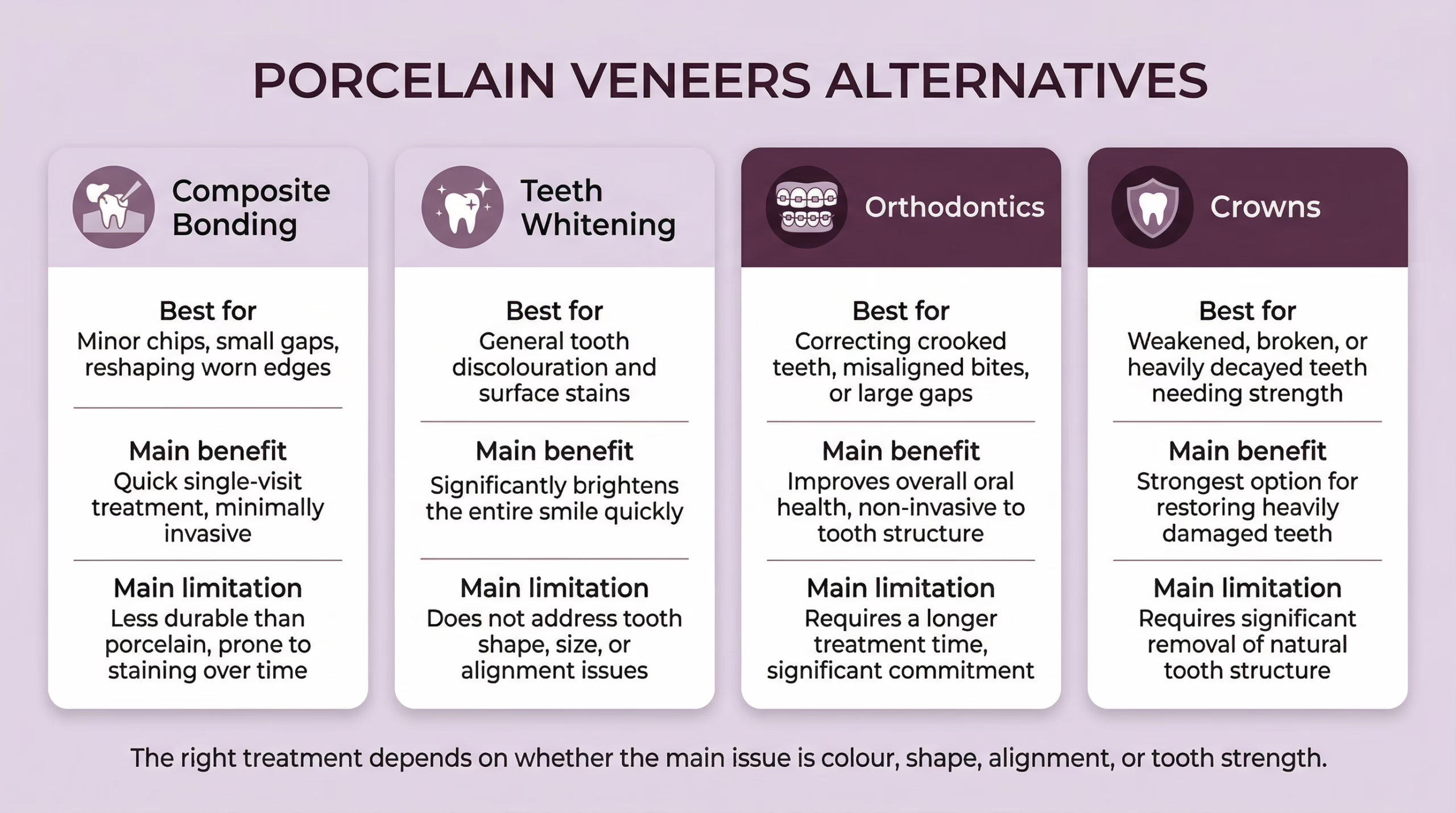
Tap or click the infographic to enlarge it.
How to judge the porcelain veneers pros and cons properly
Define the real problem
Colour, shape, spacing, wear, or alignment all point toward different solutions.
Ask whether a more conservative option could work
If the same result is realistic with less intervention, that option deserves serious consideration.
Think long term
Do not compare only the upfront fee. Consider maintenance, longevity, and the commitment involved.
Judge suitability, not hype
The best veneer cases are the ones where the clinical need clearly justifies veneers, not the ones driven by fashion.
Porcelain veneers longevity and maintenance
How long porcelain veneers can last
Longevity depends on the case, the bite, oral hygiene, grinding habits, and how well the dentist planned the veneers. For the longer-term picture, read our page on how long porcelain veneers last.
How porcelain veneers change over time
Maintenance matters too. Veneers resist staining better than composite, but they are not immune to wear, chipping, or edge changes. For more on expectations, read about whether porcelain veneers can stain.
Porcelain veneers pros and cons FAQs
Questions about cost, permanence, and value
What are the downsides of porcelain veneers?
The main downsides are cost, the possibility of tooth preparation, the fact that veneers are a long-term commitment rather than a casual reversible treatment, and the reality that they are not the right option for every case.
Are porcelain veneers worth it in the UK?
They can be worth it when the case is suitable and the patient wants a broader, more durable ceramic smile redesign. They are not worth it when a simpler and more conservative option could achieve the same goal properly.
Do porcelain veneers ruin your teeth?
No, not automatically. That claim is too simplistic. Veneers can work well when a dentist plans them properly and uses them in the right case, but unnecessary or aggressive treatment can harm teeth.
Are veneers permanent once done?
Veneers represent a long-term commitment, but the restorations themselves do not last forever. Over time, they may need maintenance, repair, or replacement, and prepared teeth cannot return to an untouched original state.
Questions about suitability and long-term care
Can you go back to normal teeth after veneers?
If your dentist has prepared the teeth, you generally cannot go back to the original untreated teeth in a true sense. That is why veneer treatment needs careful thought before starting.
Why do some dentists advise against veneers?
Usually because veneers are sometimes overused. A good dentist may advise against veneers when whitening, bonding, orthodontics, or another treatment would achieve the result more conservatively.
Are porcelain veneers better than bonding?
Not automatically. Porcelain veneers may offer better stain resistance and a more refined ceramic finish, while bonding is often more conservative and less expensive at the start. The better option depends on the case.
How long do the benefits of porcelain veneers usually last?
That depends on the case, the bite, habits, and maintenance. Well-planned veneers can perform well for many years, but wear, damage, or future replacement may still happen.