
Porcelain Veneers Alternatives
If you are comparing porcelain veneers alternatives, the main question is not which treatment sounds most premium. The real question is which option solves the actual problem most sensibly. Some smiles need whitening. Others suit bonding, orthodontics or crowns. In selected cases, veneers are still the right answer, but they are only one option within a broader cosmetic plan.
This page explains the main alternatives to porcelain veneers, when they may be better, and how to choose between them. If you want a broader porcelain veneer treatment guide, start there first. If you are also weighing treatment locally, visit our page on veneer treatment in Formby.
For many patients, the best route is the most conservative effective one. Whitening may handle shade concerns. Bonding may improve chips and small gaps. Orthodontics may correct the real alignment problem. Crowns may be more suitable where teeth are heavily restored or weak. Good cosmetic dentistry is about matching treatment to biology rather than forcing the same fix onto every smile.
When another treatment may make more sense
Porcelain veneers are not automatically the best solution just because someone wants a better smile. Sometimes the issue is colour alone. Sometimes the teeth mainly need alignment. In other cases, a direct additive treatment can achieve the result while keeping more natural tooth structure untouched.
Alternative treatments also make sense when gum health needs stabilising, the bite needs careful management, or the teeth already carry large fillings and may need fuller coverage. In those situations, a veneer can be the wrong first step. A more suitable plan starts by solving the real problem properly.

For colour concerns
When healthy teeth simply look darker than you would like, whitening is often the most conservative option.
For mild shape changes
Bonding may suit small chips, slight edge wear and modest spacing more naturally than ceramic treatment.
For crooked teeth or spacing
If alignment is the real issue, orthodontics usually offers the more biologically sensible route.
Composite bonding as an alternative to veneers
For many patients, composite bonding is the closest practical alternative to porcelain veneers. It can improve chips, small gaps, uneven edges, worn corners and minor shape issues while often staying more conservative. In suitable cases, bonding is largely additive, so little or no healthy tooth structure needs to be removed.
Bonding also has a lower starting cost for many patients. The trade-off is maintenance. Composite can stain more easily and may need polishing, repair or refreshment sooner than porcelain. If you want the direct comparison, read which is better, bonding or veneers.
When bonding may be the better option
- You want a more conservative option. Bonding is often kinder to tooth structure in suitable cases.
- The changes are relatively small. Minor chips, small spaces and edge irregularities often suit bonding well.
- You want a lower initial cost. Bonding usually costs less at the start than porcelain veneers.
- You accept maintenance. Repairs and refinements are more common over time.
- You want easier adjustment. Composite is usually simpler to modify directly than ceramic.
If your interest is specifically in resin-based treatment, you can also explore composite veneers.
Teeth whitening as an alternative to veneers
If teeth are healthy and the main complaint is that they look dull, yellow or darker than you would like, veneers may be unnecessary. Whitening can improve the smile significantly without changing tooth shape and without removing structure.
This matters because some people research veneers when what they actually want is a brighter smile, not a redesigned one. In that setting, whitening is usually the better first step. It is more conservative, less involved and often enough on its own.
When whitening is not enough
Whitening does not change shape, edge wear, spacing or alignment. It also does not change the colour of existing veneers, crowns or bonding. Where those issues drive the concern, another treatment may be more appropriate.
If you are also comparing investment, see the full cost of porcelain veneers before deciding whether a simpler option gives you better value.
Orthodontics as an alternative to veneers
When teeth are crooked, rotated or spaced, orthodontics often makes more sense than veneers because it addresses the position of the teeth rather than disguising the issue from the front. That can be the more conservative and more stable foundation.
Some patients ask whether veneers can make teeth look straighter. They can sometimes create that visual effect, but that is different from actually moving teeth. If alignment is the core issue, orthodontics is usually the stronger answer, with whitening or minor bonding added later if needed.
When orthodontics may be the better route
- The teeth are mainly crooked rather than damaged.
- There are spaces or bite issues that need proper correction.
- You want to preserve as much natural tooth structure as possible.
- A staged plan is likely to give a better long-term result.
Crowns as an alternative to veneers
Porcelain veneers are usually best for front teeth that still have enough healthy structure and mainly need aesthetic improvement. When teeth are heavily filled, root-treated, broken down or structurally weak, a veneer may not provide enough coverage or support.
In those cases, crowns can be the more appropriate option because they cover more of the tooth and may provide a better mechanical solution. That does not make crowns better than veneers in general. It means they may be better for a more compromised tooth.
Porcelain veneer alternatives compared
| Treatment | Usually best for | Main trade-off |
|---|---|---|
| Porcelain veneers | Cosmetic redesign of suitable front teeth with enough healthy structure remaining. | Not ideal when teeth are too heavily restored or weakened. |
| Composite bonding | More conservative cosmetic improvements for small to moderate changes. | Usually more maintenance and less stain resistance than porcelain. |
| Whitening | Colour improvement where tooth shape and structure are already acceptable. | Will not fix shape, wear or alignment. |
| Orthodontics | Crooked, rotated or spaced teeth that need actual movement. | Requires time and patient compliance. |
| Crowns | Teeth needing more coverage and structural protection. | Usually more extensive coverage than a veneer approach. |
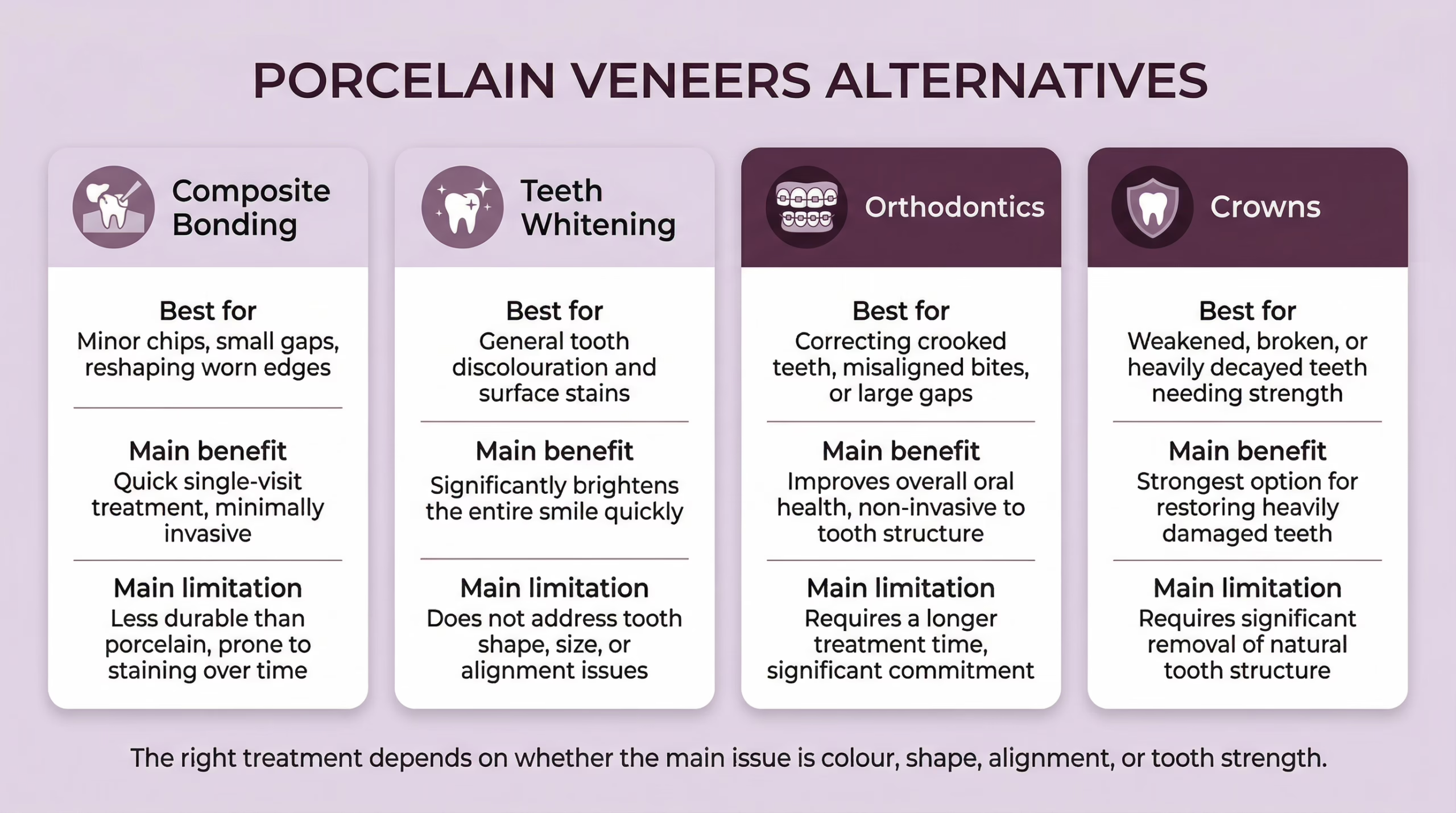
Alternatives to veneers infographic
A quick visual guide can help if you are comparing alternatives to veneers for shade improvement, shape correction, alignment changes and structural coverage side by side.
How to choose between alternatives to veneers
Identify the real problem
Work out whether the main issue is colour, shape, spacing, crookedness, wear or weakness. Different problems suit different treatments.
Start conservatively where possible
If whitening, orthodontics or bonding can do the job properly, that may be a smarter first move than jumping straight to ceramic treatment.
Compare long-term value
Cost matters, but so do maintenance, longevity, stain resistance and how much natural tooth structure is being altered.
Choose what fits the biology
The best cosmetic plan is the one that suits the teeth properly, not the one that sounds most dramatic.
Are veneers still the right choice?
Sometimes, yes. Veneers remain an excellent treatment in the right case because they can deliver precise shape control, a refined ceramic finish and strong stain resistance. The key is proper selection rather than automatic use.
If you are still deciding, it helps to read the benefits and drawbacks of veneers alongside the alternatives so the decision is based on suitability rather than marketing.
FAQs about alternatives to veneers
What is the best alternative to porcelain veneers?
The best alternative depends on the real problem being treated. Whitening may be best for colour concerns, composite bonding may be best for minor shape changes, orthodontics may be best for alignment issues, and crowns may be more appropriate for weakened teeth.
Is bonding better than veneers for minor changes?
Often, yes. Composite bonding is frequently the better starting point for small chips, minor gaps and subtle edge reshaping because it can be more conservative and less expensive at the start.
Can whitening replace veneers?
Whitening can replace veneers when colour is the main concern and the teeth are otherwise healthy and well-shaped. It will not correct shape issues, uneven edges, wear or alignment problems.
Are crowns an alternative to veneers?
Yes, but usually in a different type of case. Crowns may be more appropriate when teeth are heavily restored, weakened or need more coverage than a veneer can provide.
Can Invisalign be a better option than veneers?
Yes. If the main problem is crowding, spacing or tooth position, orthodontics such as Invisalign is often more sensible than using veneers to disguise alignment from the front.
Are composite veneers cheaper than porcelain veneers?
They usually have a lower starting cost than porcelain veneers, but they also tend to need more maintenance and are more likely to pick up staining over time.
What is the most conservative option instead of veneers?
Whitening is usually the most conservative option when only colour needs improving. Orthodontics and composite bonding can also be more conservative than veneers depending on the problem being treated.
Do I always need veneers for a smile makeover?
No. Many smile improvements can be achieved with whitening, alignment, bonding or a staged combination of treatments without jumping straight to porcelain veneers.