
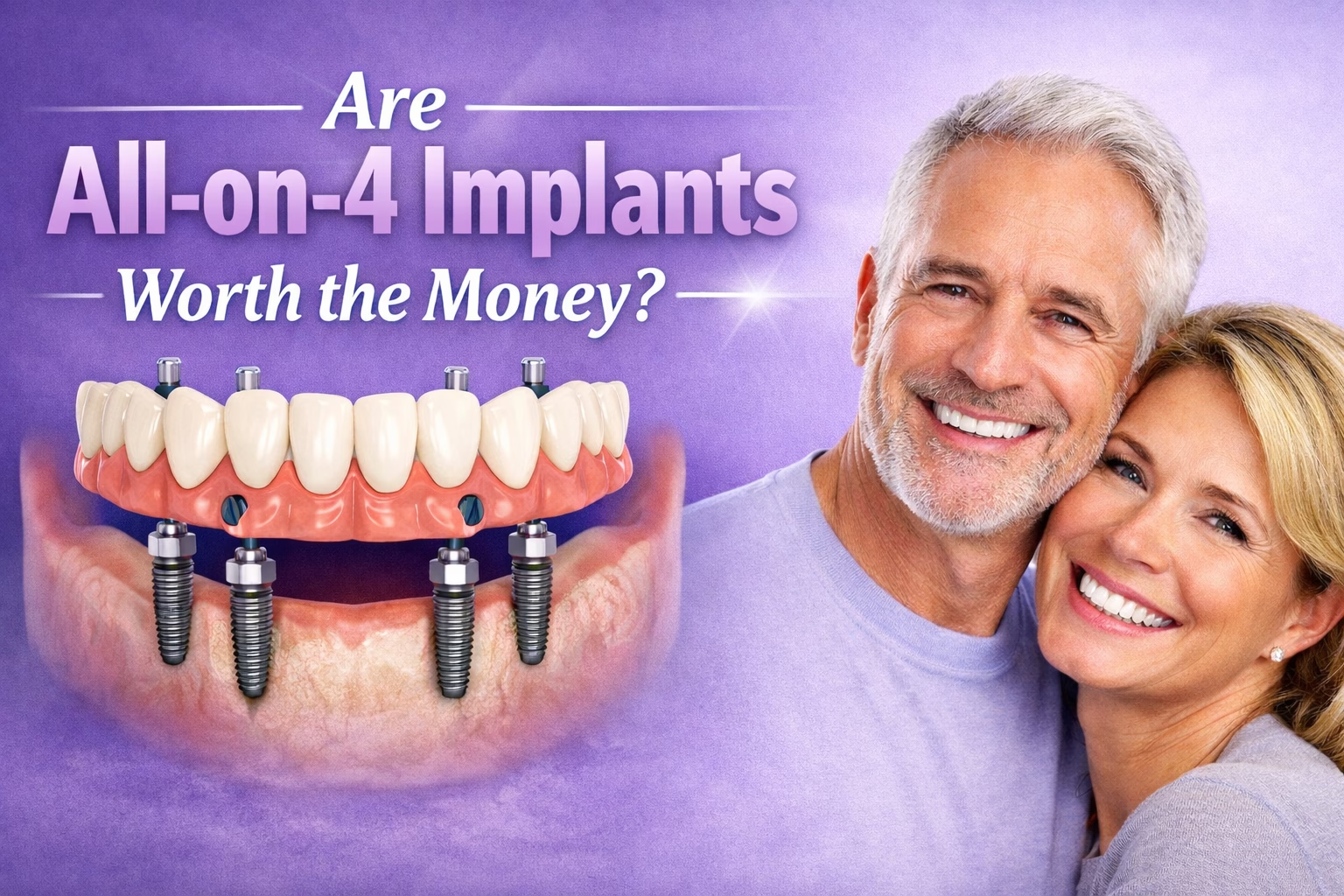
Are All-on-4 implants worth the money?
Are All-on-4 implants worth the money? For the right patient, yes. For the wrong patient, no — and that is where most “regret” stories start. Importantly, this page helps you decide clearly using UK costs, comparisons and the questions you should ask before you commit.
All-on-4 implant treatment is designed to provide a fixed, long-term alternative to removable dentures using fewer implants than traditional full-arch approaches.
Are All-on-4 implants worth the money in the UK? Cost breakdown
Are All-on-4 implants worth the money when comparing quotes?
Most quotes differ because you are not just buying implants — you are buying planning, surgery, same-day provisional teeth, final materials, and long-term biomechanics.
Final cost varies with complexity, number of implants, extractions, and bridge choice (PMMA / composite / zirconia). In addition, finance and 0% options may be available.
If cashflow matters, compare total value, not just monthly payment. Therefore, ask what is included, what is excluded, and what maintenance expectations apply.
A key factor in this decision is the overall cost of All-on-4, particularly when reviewing UK pricing and available finance options.
Tell-it-like-it-is: if you are comparing quotes, the cheapest All-on-4 is rarely the best value. Ultimately, the “worth it” equation is: planning quality + surgical execution + prosthetic quality + maintenance strategy.
Are All-on-4 implants worth the money for you?
All-on-4 is worth it when…
- You have failing teeth, repeated repairs, or advanced gum problems and want a decisive long-term plan.
- You hate loose dentures and want fixed teeth you do not remove daily.
- You want fewer surgeries and a faster route to a stable bite (often with same-day provisional teeth).
- You want predictable outcomes based on digital planning, not guesswork.
All-on-4 is not worth it when…
- You are being “sold” a shortcut without a proper assessment, imaging and a plan for maintenance.
- Your expectations are unrealistic (for example: perfection with zero maintenance).
- Medical or lifestyle risks are unmanaged (for example: heavy smoking, uncontrolled diabetes).
- A simpler solution would meet your goals (for example: stabilised implant-retained dentures).
In practice, value is not the headline price — it is the reduction in compromise over the next 5–15+ years: stability, chewing confidence, facial support, comfort, and fewer ongoing emergencies.
How much is a full set of All-on-4 implants?
Most people mean both arches (upper and lower). Your final figure depends on complexity and bridge materials; however, this gives a practical framework:
| Treatment | What it covers (in plain English) | Typical range |
|---|---|---|
| One arch (All-on-4) | 4 implants + fixed provisional teeth (often same day) + final bridge after integration | UK usually £13k–£20k; Azure guide £16,995/arch |
| Both arches (“full set”) | Upper + lower full-arch fixed teeth plan | Commonly £26k–£40k+ depending on complexity/material upgrades |
| Individual implants per tooth | Replacing many teeth one-by-one (rarely the most efficient approach) | Often higher overall, plus longer timelines |
If you are trying to decide if it is “worth it”, compare your likely outcome over time — not just the day-one fee.
What are you actually paying for?
What drives value (and reduces regret)
- Diagnosis & planning: CBCT imaging, digital planning, and the surgical plan that drives precision.
- Surgery day execution: extractions (if needed), implant placement, and comfort control.
- Same-day provisional teeth: temporary fixed teeth so you can function while healing.
- Final bridge: material choice, bite calibration, and aesthetics.
- Aftercare & maintenance: reviews, hygiene strategy, and long-term risk reduction.
Questions to ask before you compare quotes
- Is CBCT included, and who signs off the plan?
- What provisional teeth are included on day one?
- What final bridge material is quoted (PMMA vs composite vs zirconia)?
- What is excluded (bone grafting, sedation, extractions, repairs, hygiene)?
- What maintenance plan is expected, and when might a refresh be needed?
Bottom line: if a quote cannot answer these clearly, you cannot judge value properly.
All-on-4 vs All-on-6: does paying more create better value?
All-on-6 can improve load distribution in certain cases; however, it is not automatically “better value”. The right choice depends on bone quality, bite forces, risk profile, and restorative goals.
In some cases, a direct comparison with All-on-6 helps clarify whether additional implants offer meaningful long-term value.
| Factor | All-on-4 | All-on-6 |
|---|---|---|
| Implants | 4 per arch | 6 per arch |
| Bone demand | Often lower (angled posterior implants can help avoid grafting) | Often higher (more implants, more sites) |
| Surgical footprint | Typically shorter | Typically longer |
| Cost | Lower | Higher |
| Value call | Excellent when planned properly | Worth it when clinical factors justify the extra implants |
Practical guidance: choose All-on-6 because your clinical conditions benefit from it — not because a blog says it is “always better”.
What is cheaper than All-on-4?
There are cheaper options. Typically, the trade-off is stability, chewing confidence, and long-term compromise.
Cheaper options (and the honest downsides)
- Removable dentures: cheaper upfront, but can move, rub, and do not prevent ongoing bone changes.
- Implant-retained (snap-on) dentures: more stable and often cheaper than fixed full-arch — but still removable.
- Staged approach: stabilisation first, fixed teeth later — spreads cost, but extends timeline.
Options that are not “cheaper” in reality
- Replacing many teeth with single implants: can raise total cost and extend timelines.
- Tooth-supported bridges: can cost less initially, but require drilling support teeth and do not prevent bone changes in missing-tooth areas.
All-on-4 often sits in the “maximum stability for the investment” zone — when it is the right indication.
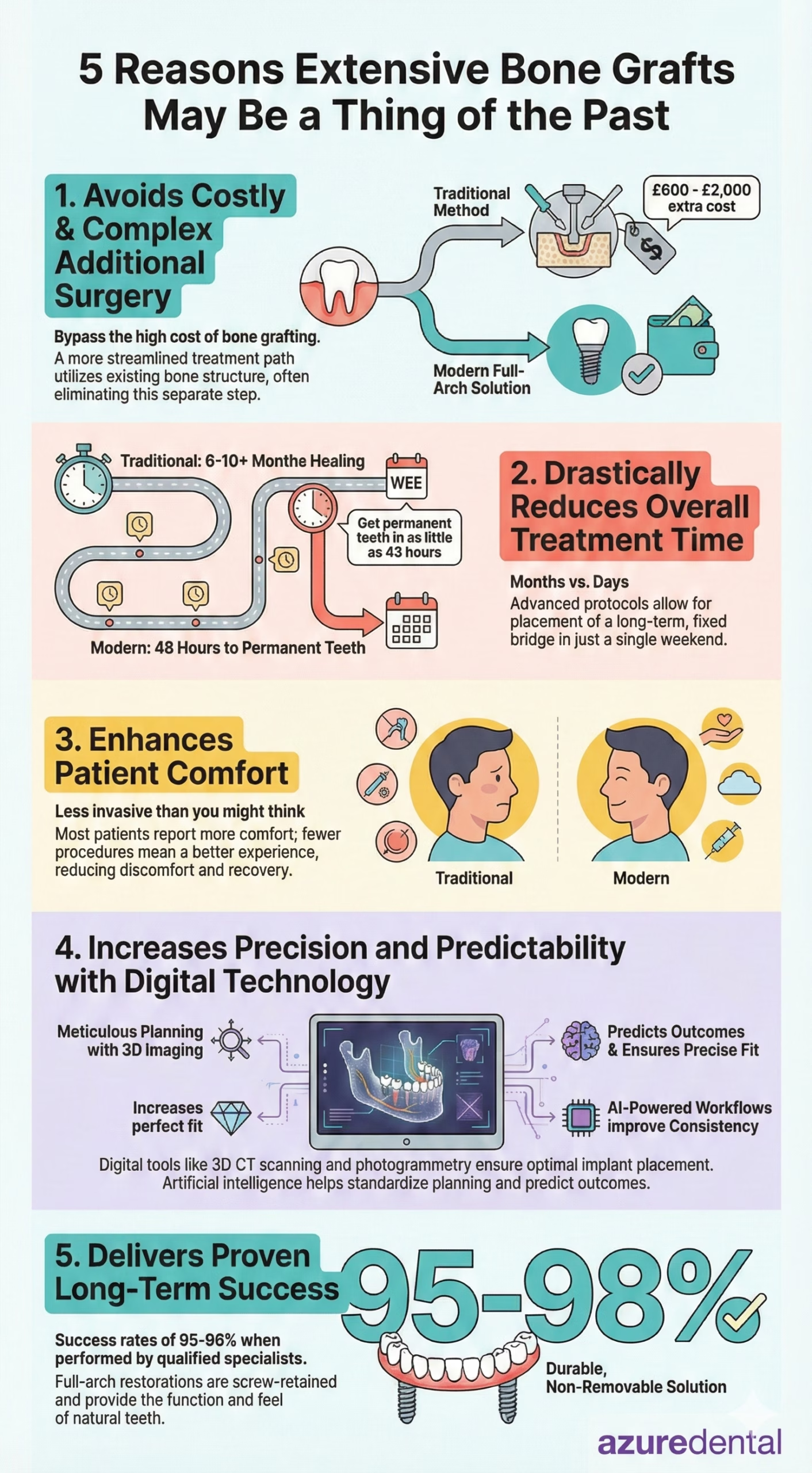
Does All-on-4 avoid bone grafting?
In many cases, yes. The protocol often uses angled posterior implants to maximise existing bone and reduce the need for extensive grafting. However, grafting is not “never” — it depends on your anatomy and risk profile.
- Best-case: graft-free, predictable, faster overall timeline.
- Sometimes: minor adjunctive procedures still needed.
- Complex cases: alternative approaches (including zygomatic implants) may be more appropriate.
How long do All-on-4 implants last?
Much of the perceived value comes from the long-term reliability of All-on-4, with high success rates reported over many years.
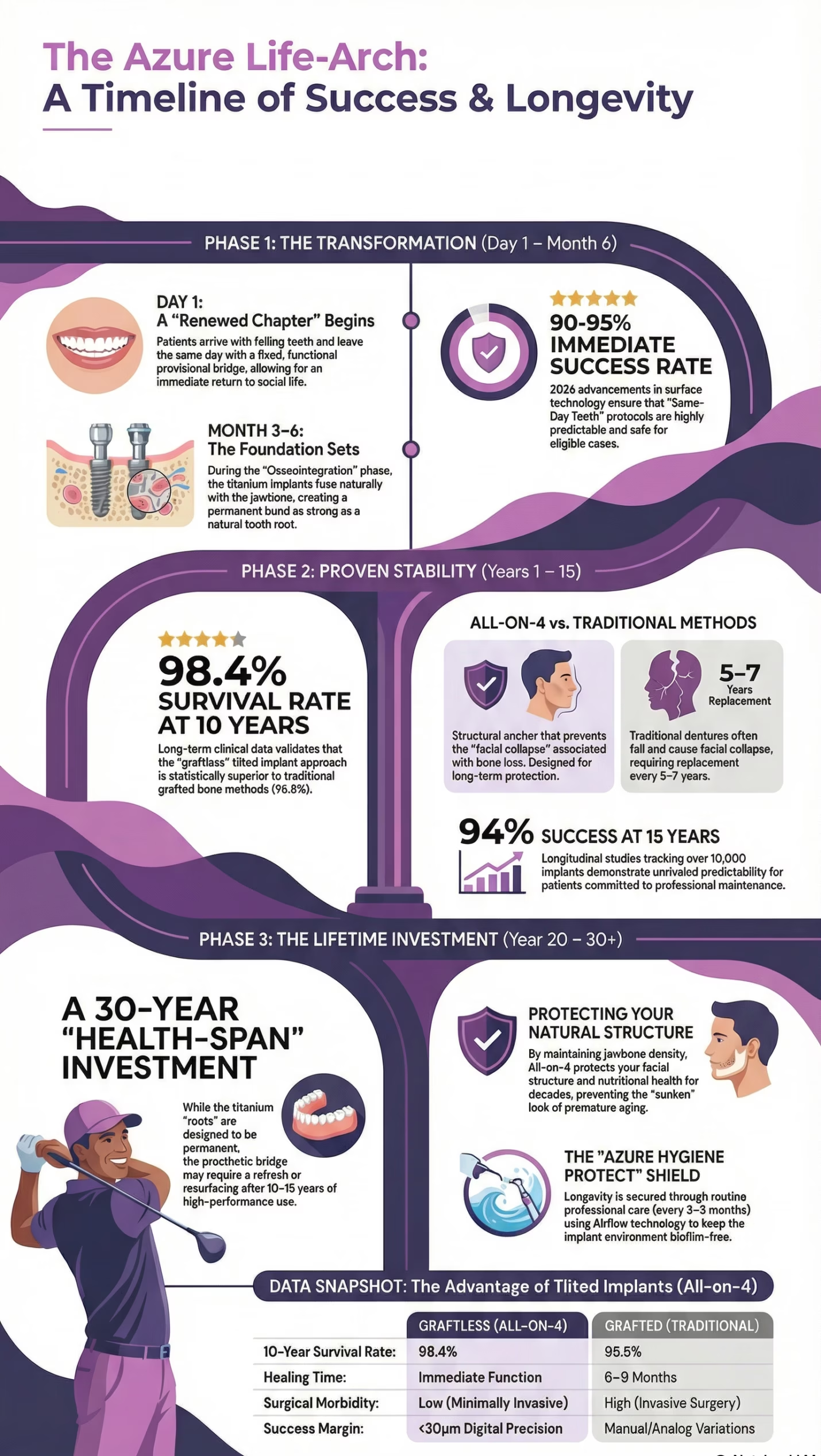
For suitable patients with good aftercare, the long-term outlook is strong. The key nuance is this:
- Implants: designed as the long-term foundation.
- The bridge: may need maintenance, relining, repairs, or refresh over time — especially with high bite forces or bruxism.
- Hygiene & reviews: are not optional. They protect your result long term.
In other words, “fit and forget” is a red flag. Longevity comes from planning, fit and maintenance.
Who should not get All-on-4?
Reasons to pause (until addressed)
- Uncontrolled diabetes or significant medical instability.
- Heavy smoking (especially if not willing to reduce/stop).
- Untreated gum disease with poor plaque control.
- Unmanaged bruxism without a protection plan.
Reasons to upgrade or change approach
- Very soft bone / high risk profile (All-on-6 or alternative plans may be preferred).
- Very high aesthetic demands where premium materials/steps are required.
- Severe bone loss where zygomatic solutions may be more predictable.
This is why “worth it” starts with assessment, not marketing.
Frequently asked questions about All-on-4 cost and value
Are All-on-4 implants worth the money? Quick answers
Are All-on-4 implants worth the money?
They are worth it when you want fixed, stable teeth and your alternative is ongoing compromise (loose dentures, failing teeth, repeated repairs). They are not worth it if you are not clinically suitable, or if the plan cuts corners on planning, materials, or maintenance.
How much does All-on-4 cost in the UK?
Most UK fees sit in the mid-to-high five figures for full-arch fixed teeth. Your final cost depends on complexity, extractions, bone conditions, and bridge materials. At Azure, the current guide price shown is £16,995 per arch, with finance options subject to status.
How much is a full set of All-on-4 implants?
Most people mean upper and lower arches. This is commonly in the £26k–£40k+ bracket depending on complexity and material upgrades. A consultation is the only way to price accurately.
All-on-4 vs All-on-6: which is better?
All-on-6 can be beneficial in certain clinical situations, but it is not automatically “better value”. The right choice is the one that matches your bone quality, bite forces, and risk profile.
More All-on-4 questions patients ask
What is cheaper than All-on-4?
Removable dentures and implant-retained (snap-on) dentures are usually cheaper. The trade-off is typically less permanence and, for standard dentures, reduced stability and continued jaw changes over time.
Does All-on-4 avoid bone grafting?
Often it can, because angled posterior implants may maximise available bone. However, not every case is graft-free. Suitability depends on anatomy and risk factors.
Does All-on-4 hurt?
Treatment is performed under local anaesthetic, so you should not feel pain during surgery. Afterwards, soreness is usually short-lived and manageable. Sedation options can help if anxiety is a concern.
How long will All-on-4 last?
The implants are intended as long-term foundations. The bridge may require maintenance or refresh over time depending on material, bite forces, and hygiene. Long-term success is supported by routine reviews and professional cleaning.
Still asking: are All-on-4 implants worth the money for me?
Bring your current quote(s). We’ll show you what’s included, what’s missing and, crucially, whether All-on-4 is the best-value plan for your case.