
When tooth decay extends beyond what a standard filling can effectively address but doesn't warrant a full crown, a porcelain inlay offers an ideal middle ground. This sophisticated dental restoration combines the durability of traditional crowns with the conservative approach of preserving maximum natural tooth structure. For patients seeking both functional restoration and aesthetic excellence, understanding how porcelain inlays work and their advantages can inform better decisions about dental care.
Understanding Porcelain Inlay Restorations
A porcelain inlay represents a custom-fabricated dental restoration designed to repair moderate tooth decay or damage that occurs within the cusps of a tooth. Unlike conventional fillings that are placed directly into the cavity during a single appointment, these restorations are created in a dental laboratory based on precise impressions of your tooth structure.
The distinction between inlays and other restorations lies primarily in coverage area. Standard fillings fill small cavities but may lack the strength for larger areas of decay. Full crowns cover the entire visible portion of a tooth, which sometimes requires removing healthy tooth structure. A porcelain inlay fits precisely within the contours of the tooth, replacing only the damaged area whilst preserving surrounding healthy enamel.
Material Advantages
Porcelain offers several compelling benefits as a restorative material:
- Aesthetic compatibility: The translucent quality of porcelain closely mimics natural tooth enamel
- Colour customisation: Laboratory technicians can match the exact shade of surrounding teeth
- Stain resistance: Unlike composite materials, porcelain resists discolouration from coffee, tea, and other substances
- Biocompatibility: Porcelain causes minimal irritation to gum tissue and oral structures
The ceramic composition provides exceptional hardness whilst maintaining a smooth surface that feels natural against the tongue and opposing teeth. This material doesn't conduct temperature as readily as metal alternatives, reducing sensitivity to hot and cold foods.
The Treatment Process and Timeline
Receiving a porcelain inlay typically requires two separate appointments, each serving a distinct purpose in the restoration process. This methodical approach ensures precision fitting and optimal aesthetic results that rival natural tooth appearance.
First Appointment: Preparation and Impressions
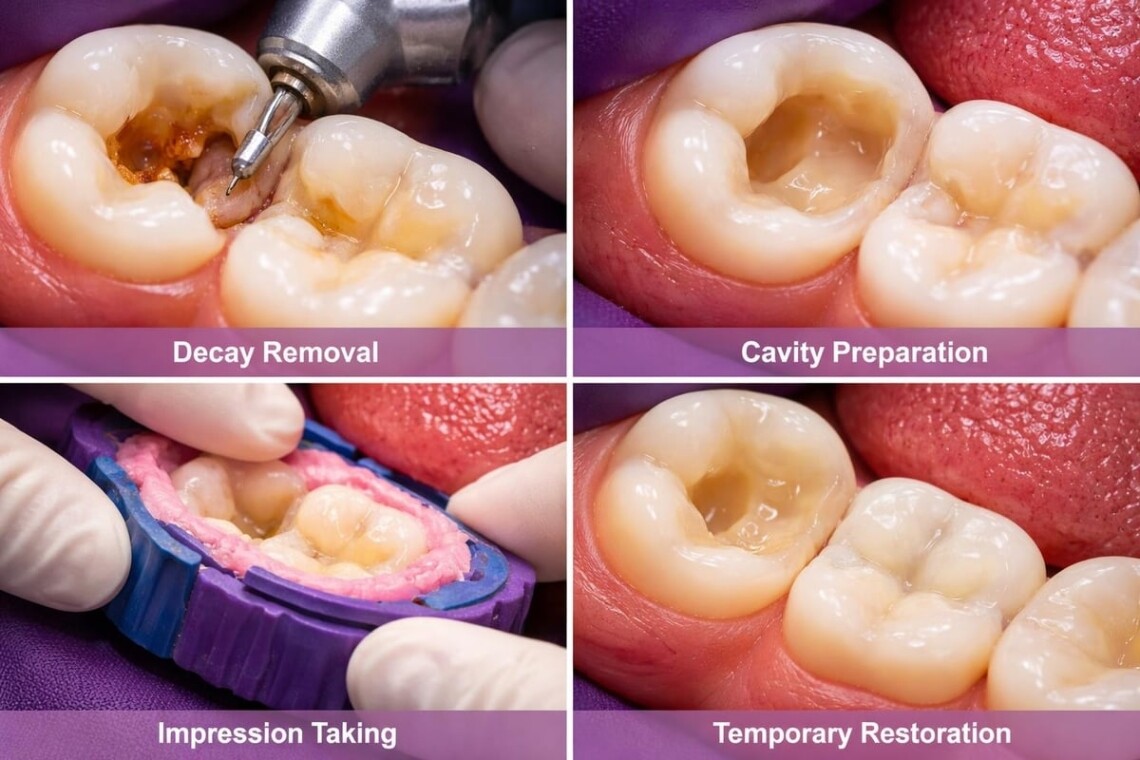
During the initial visit, your dentist removes decay and prepares the tooth to receive the restoration. This preparation involves:
- Anaesthesia administration to ensure complete comfort throughout the procedure
- Decay removal using precision instruments to eliminate all compromised tooth structure
- Cavity preparation with specific angles and depths to support the restoration
- Impression taking to capture exact tooth dimensions and bite relationships
- Temporary filling placement to protect the prepared tooth between appointments
The impressions collected during this visit travel to a dental laboratory where skilled technicians craft your custom restoration. Advanced digital imaging may replace traditional impression materials at practices equipped with CAD/CAM technology, though many clinics continue using proven conventional methods.
Laboratory Fabrication Phase
Between appointments, the dental laboratory receives your impressions and begins the meticulous process of creating the restoration. Technicians pour dental stone into the impressions to create exact replicas of your teeth. Using these models, they craft the porcelain inlay to fit precisely within the prepared cavity.
The fabrication process allows for exceptional attention to detail regarding colour matching, contour refinement, and occlusal (bite) surface anatomy. This is where porcelain inlay restorations demonstrate their superiority over chair-side alternatives, as laboratory conditions enable optimal material handling and curing.
Second Appointment: Bonding and Finalisation
Once the laboratory completes fabrication, you return for the bonding appointment. This visit typically proceeds more quickly than the initial preparation:
- The temporary filling is removed and the tooth cleaned thoroughly
- The porcelain inlay is tested for fit and bite alignment
- Minor adjustments are made if necessary to ensure perfect placement
- The tooth surface is etched and prepared with bonding agents
- The restoration is permanently cemented using high-strength adhesive
- Excess cement is removed and the bite is checked again
- Final polishing creates smooth margins and natural lustre
The bonding process creates a molecular connection between the porcelain and natural tooth structure, effectively sealing the restoration and reinforcing the remaining tooth. This adhesive technology represents a significant advancement over older cementation methods.
Durability and Longevity Factors
One of the most compelling reasons patients choose porcelain inlays relates to their impressive lifespan. With proper care and maintenance, these restorations regularly function effectively for fifteen to thirty years, and the durability of porcelain inlays often exceeds that of traditional filling materials.
| Restoration Type | Average Lifespan | Replacement Frequency |
|---|---|---|
| Amalgam Fillings | 10-15 years | Moderate |
| Composite Fillings | 5-10 years | Higher |
| Porcelain Inlays | 15-30 years | Lower |
| Gold Inlays | 15-30 years | Lower |
Several factors influence how long your restoration will last:
Material strength: Porcelain exhibits exceptional compressive strength, resisting the considerable forces generated during chewing. Modern ceramic formulations have enhanced fracture resistance compared to earlier generations.
Precise fit: Laboratory fabrication allows for microscopic accuracy in margins and contours. Superior fit minimises gaps where bacteria might accumulate and cause secondary decay.
Bonding quality: The adhesive cementation process creates a sealed unit that distributes biting forces evenly across the tooth structure. This integration prevents the micro-movement that can weaken other restoration types.
Patient habits: Avoiding excessive force from teeth grinding, not using teeth as tools, and maintaining excellent oral hygiene all contribute significantly to restoration longevity.
At Azure Dental, we work with premier dental laboratories to ensure every restoration meets exacting standards for fit, function, and aesthetics. Our commitment to quality materials and precise techniques maximises the lifespan of every porcelain inlay we place.

Clinical Indications and Ideal Candidates
Not every cavity requires a porcelain inlay, and understanding when this restoration type offers the best solution helps patients make informed decisions. Dentists evaluate several factors when recommending treatment options, considering both immediate needs and long-term outcomes.
Appropriate Clinical Situations
Porcelain inlays excel in specific scenarios:
- Moderate decay affecting the chewing surface between tooth cusps
- Failed or deteriorating amalgam fillings requiring replacement
- Fractured teeth where damage doesn't extend to cusps
- Large cavities where composite fillings would lack adequate strength
- Situations requiring superior aesthetic outcomes in visible teeth
The restoration proves particularly valuable for molars and premolars, which endure substantial chewing forces. These posterior teeth benefit from porcelain's combination of strength and precision fit.
Patient Considerations
Ideal candidates for porcelain inlays typically demonstrate:
- Adequate remaining tooth structure to support the restoration
- Good oral hygiene habits that will protect the investment
- Realistic expectations about treatment timeline and results
- Commitment to follow-up care including regular dental examinations
- Absence of severe bruxism (teeth grinding) unless managed with night guards
Patients who value natural appearance alongside functional restoration often appreciate the aesthetic benefits porcelain provides. Those with metal allergies or sensitivities find porcelain particularly appealing as a biocompatible alternative to gold or amalgam restorations.
Comparing Inlays, Onlays, and Alternative Restorations
Understanding how porcelain inlays compare to onlays and other restoration types clarifies which option best addresses specific dental concerns. Each restoration category serves distinct purposes based on the extent and location of tooth damage.
Inlays Versus Onlays
The primary distinction concerns coverage area. Inlays fit within the cusps (raised points) of the tooth, addressing damage in the central portion. Onlays extend over one or more cusps, providing additional coverage for more extensive damage. Think of inlays as "filling the valley" whilst onlays "cap the mountains" of tooth anatomy.
Both restoration types share similar advantages regarding durability and aesthetics. The choice between them depends entirely on how much tooth structure requires replacement. Your dentist determines the appropriate option based on cavity size and location.
Porcelain Versus Other Materials
| Material | Aesthetics | Durability | Cost | Best Applications |
|---|---|---|---|---|
| Porcelain | Excellent | Very Good | Higher | Visible teeth, aesthetic priority |
| Gold | Poor | Excellent | Highest | Posterior teeth, maximum strength |
| Composite | Good | Moderate | Lower | Small to medium restorations |
| Amalgam | Poor | Good | Lowest | Non-visible posterior teeth |
Gold inlays offer superior longevity and exceptional strength but lack aesthetic appeal for visible teeth. Many patients find the metallic appearance unacceptable, particularly for restorations that show when smiling or speaking.
Composite resins can be placed directly during a single appointment, offering convenience and lower initial cost. However, they demonstrate higher wear rates and may discolour over time, potentially requiring earlier replacement.
Care and Maintenance Requirements
Protecting your investment in a porcelain inlay requires consistent attention to oral hygiene and sensible dietary habits. Whilst these restorations prove remarkably durable, certain practices extend their functional lifespan and maintain their aesthetic appeal.
Daily Hygiene Practices
- Brush twice daily using a soft-bristled toothbrush and non-abrasive toothpaste
- Floss carefully around the restoration margins to remove plaque accumulation
- Consider using an antimicrobial mouth rinse to reduce bacterial populations
- Pay particular attention to the junction between the restoration and natural tooth
The margins where porcelain meets natural enamel represent the most vulnerable areas for bacterial accumulation. Meticulous cleaning in these zones prevents secondary decay that could compromise the restoration.
Dietary and Lifestyle Considerations
Certain habits stress dental restorations unnecessarily. Avoiding these behaviours protects both the porcelain inlay and surrounding natural teeth:
Foods to approach cautiously: Extremely hard items like ice, hard sweets, and unpopped popcorn kernels can fracture porcelain. Whilst the material exhibits impressive strength, excessive force may cause chips or cracks.
Habits to modify: Using teeth to open packages, bite fingernails, or hold objects subjects restorations to inappropriate forces. These behaviours should be avoided regardless of whether you have dental work, but they pose particular risks to restored teeth.
Bruxism management: Patients who grind or clench their teeth, particularly during sleep, should discuss night guard options with their dentist. These protective appliances distribute forces more evenly and prevent excessive wear on both restorations and natural teeth.
Professional Monitoring
Regular dental examinations allow your dentist to monitor the restoration's condition and address minor issues before they escalate. During these appointments, professionals check for:
- Marginal integrity and seal quality
- Surface wear patterns
- Signs of secondary decay
- Bite alignment changes
- Overall restoration stability
At our Formby practice, we recommend examination intervals based on individual risk factors and oral health status. Most patients benefit from six-monthly reviews, though some situations warrant more frequent monitoring.
Cost Considerations and Value Assessment
Investment in a porcelain inlay typically exceeds the cost of conventional fillings but remains considerably less expensive than full crown coverage. Understanding the financial aspects helps patients evaluate the long-term value proposition these restorations offer.
Pricing Factors
Several variables influence the total cost:
- Geographic location and local market rates for dental services
- Dentist expertise and practice overhead expenses
- Laboratory fees for custom fabrication
- Material selection and quality grade
- Tooth location and restoration complexity
Private dental practices in areas like Liverpool and Formby typically quote prices that reflect both clinical expertise and premium laboratory partnerships. Whilst treatment costs vary, the investment should be considered alongside expected longevity and functional benefits.
Long-Term Value Analysis
When evaluating cost, consider the lifespan advantage porcelain inlays provide. A restoration lasting twenty years represents better value than a filling requiring replacement every seven years, even if the initial expense proves higher. Additional value factors include:
- Preservation of natural tooth structure reducing future restoration needs
- Superior aesthetics maintaining confidence in social and professional situations
- Reduced sensitivity compared to some alternative materials
- Lower likelihood of secondary complications requiring additional treatment
Many patients find that the combination of durability, aesthetics, and tooth preservation justifies the investment, particularly for visible teeth or situations where conventional fillings have failed previously.
Post-Treatment Expectations and Recovery
Following porcelain inlay placement, most patients experience minimal discomfort and resume normal activities quickly. Understanding typical post-treatment sensations helps distinguish normal healing from situations requiring professional attention.
Immediate Post-Procedure Period
The first twenty-four to forty-eight hours after bonding may involve:
- Mild sensitivity to temperature changes, particularly cold
- Slight soreness in the gum tissue surrounding the treated tooth
- Awareness of the restoration when biting or chewing
- Temporary numbness if local anaesthetic was used during the appointment
These sensations typically resolve within a few days as tissues adapt to the restoration. Pain relievers available without prescription usually provide adequate comfort if needed.
Adaptation Phase
Your mouth requires time to adjust to the new restoration, even though it's been precisely crafted to match your bite. During the first week:
Bite awareness: The restored tooth may feel slightly "high" when closing your mouth. Often this sensation diminishes as you adapt, but if it persists beyond several days, contact your dentist for a simple adjustment.
Chewing pattern: You might unconsciously favour the opposite side when eating. Gradually reintroduce the restored tooth to normal function, starting with softer foods and progressing to your regular diet.
Sensitivity reduction: Any temperature sensitivity should decrease progressively. Increasing sensitivity or pain warrants professional evaluation.
When to Seek Follow-Up Care
Contact your dental practice if you experience:
- Sharp pain when biting that doesn't improve after a few days
- Increasing rather than decreasing sensitivity
- Visible chips, cracks, or changes in the restoration
- The restoration feeling loose or moving
- Persistent discomfort that interferes with eating or sleeping
These symptoms may indicate bite adjustment needs or, rarely, complications requiring attention. Early intervention typically resolves issues quickly and prevents more significant problems.
Technological Advances in Porcelain Restoration
The field of cosmetic and restorative dentistry continues evolving, with innovations improving the precision, aesthetics, and longevity of porcelain inlays. Modern techniques offer advantages that weren't available even a decade ago.
Digital Impression Technology
Traditional impression materials, whilst effective, sometimes cause gagging or discomfort for patients. Digital intraoral scanners now capture tooth dimensions using optical technology, creating three-dimensional models without conventional impression trays. These digital files transmit directly to laboratories, reducing potential distortion and improving final fit accuracy.
CAD/CAM Fabrication
Computer-aided design and manufacturing systems allow some practices to mill porcelain restorations on-site, potentially completing treatment in a single extended appointment. Whilst this convenience appeals to many patients, traditional laboratory fabrication still offers certain advantages in complex cases requiring extensive customisation.
Material Science Improvements
Contemporary porcelain formulations demonstrate enhanced properties compared to earlier generations:
- Increased fracture toughness resisting crack propagation under stress
- Improved bonding characteristics creating stronger adhesion to tooth structure
- Enhanced aesthetic properties including better translucency and colour stability
- Bioactive materials that may promote remineralisation at restoration margins
These advances contribute to the impressive longevity and patient satisfaction rates porcelain inlays currently demonstrate in clinical practice.
Addressing Common Patient Concerns
Patients considering porcelain inlays frequently ask similar questions about the treatment process, outcomes, and alternatives. Addressing these concerns helps create realistic expectations and confidence in treatment decisions.
Pain and Discomfort During Treatment
Modern anaesthetic techniques ensure complete numbness throughout the preparation appointment. Most patients report no pain during either the preparation or bonding visits. The most uncomfortable aspect typically involves keeping the mouth open for extended periods rather than actual tooth sensitivity.
Between appointments whilst wearing the temporary filling, some temperature sensitivity may occur, but significant pain should be reported to your dentist immediately as it may indicate nerve proximity issues requiring assessment.
Visibility and Natural Appearance
One primary advantage of porcelain involves its ability to mimic natural tooth enamel. When properly fabricated and placed, these restorations become virtually undetectable. Even dental professionals examining your mouth may struggle to identify which teeth contain restorations without careful inspection.
The translucent quality of porcelain allows light to pass through similarly to natural enamel, preventing the opaque or flat appearance sometimes associated with other materials. Colour matching technology ensures the restoration blends seamlessly with surrounding teeth.
Comparing Lifespan to Alternative Options
Questions about how long porcelain inlays last compared to other restorations frequently arise. Research and clinical experience demonstrate that properly maintained inlays commonly function effectively for two to three decades, matching or exceeding the longevity of gold restorations whilst providing superior aesthetics.
Composite fillings, whilst initially less expensive, typically require replacement within five to ten years. Amalgam fillings last longer than composites but shorter than porcelain or gold, and they lack aesthetic appeal and may contribute to tooth staining over time.
Special Considerations for Complex Cases
Certain clinical situations require additional planning when considering porcelain inlays. These scenarios don't necessarily preclude this restoration type but may influence treatment sequencing or technique modifications.
Multiple Surface Involvement
When decay extends across three or more tooth surfaces, the restoration becomes more complex but remains feasible. Extensive inlays require particularly precise fabrication and may take additional laboratory time to ensure proper fit and adequate strength.
In some extensive cases, an onlay or even a full crown might provide better long-term structural support. Your dentist evaluates the amount of remaining healthy tooth structure when recommending the most appropriate restoration type.
Teeth with Previous Root Canal Treatment
Teeth that have undergone endodontic therapy often benefit from porcelain inlays, though structural considerations become paramount. Root-treated teeth lose some internal moisture content over time, potentially becoming more brittle. The reinforcing effect of a well-bonded inlay can actually strengthen these teeth by binding the remaining structure together.
However, teeth with very large pulp chambers or those missing significant structure may require crown coverage instead to prevent fracture. Each situation requires individual assessment based on specific anatomy and damage extent.
Paediatric Applications
Porcelain inlays are rarely used in children with primary (baby) teeth, as these teeth will be lost naturally. However, older adolescents with permanent teeth may be excellent candidates, particularly if they've experienced significant decay or trauma to developing adult teeth.
The investment in high-quality restorations for young patients provides decades of service, making the cost-benefit ratio particularly favourable compared to adults who may have shorter expected lifespans for their restorations.
Porcelain inlays represent a sophisticated solution for restoring damaged teeth whilst preserving natural structure and delivering exceptional aesthetic results. Their combination of durability, biocompatibility, and seamless appearance makes them an excellent choice for patients seeking long-lasting dental restorations. If you're considering options for repairing tooth decay or replacing failing fillings, the experienced team at Azure Dental can assess your specific situation and develop a personalised treatment plan that aligns with your oral health goals and aesthetic preferences.