
How does Invisalign work? This page explains how Invisalign works step by step, including scanning, digital planning, Invisalign attachments, IPR, progress checks, refinements and retainers.
How Does Invisalign Work? A Step-by-Step Guide
How does Invisalign work? Invisalign works step by step using a series of custom aligners that apply gentle, planned pressure to specific teeth. Then, you move to the next set on schedule until you reach the final result.
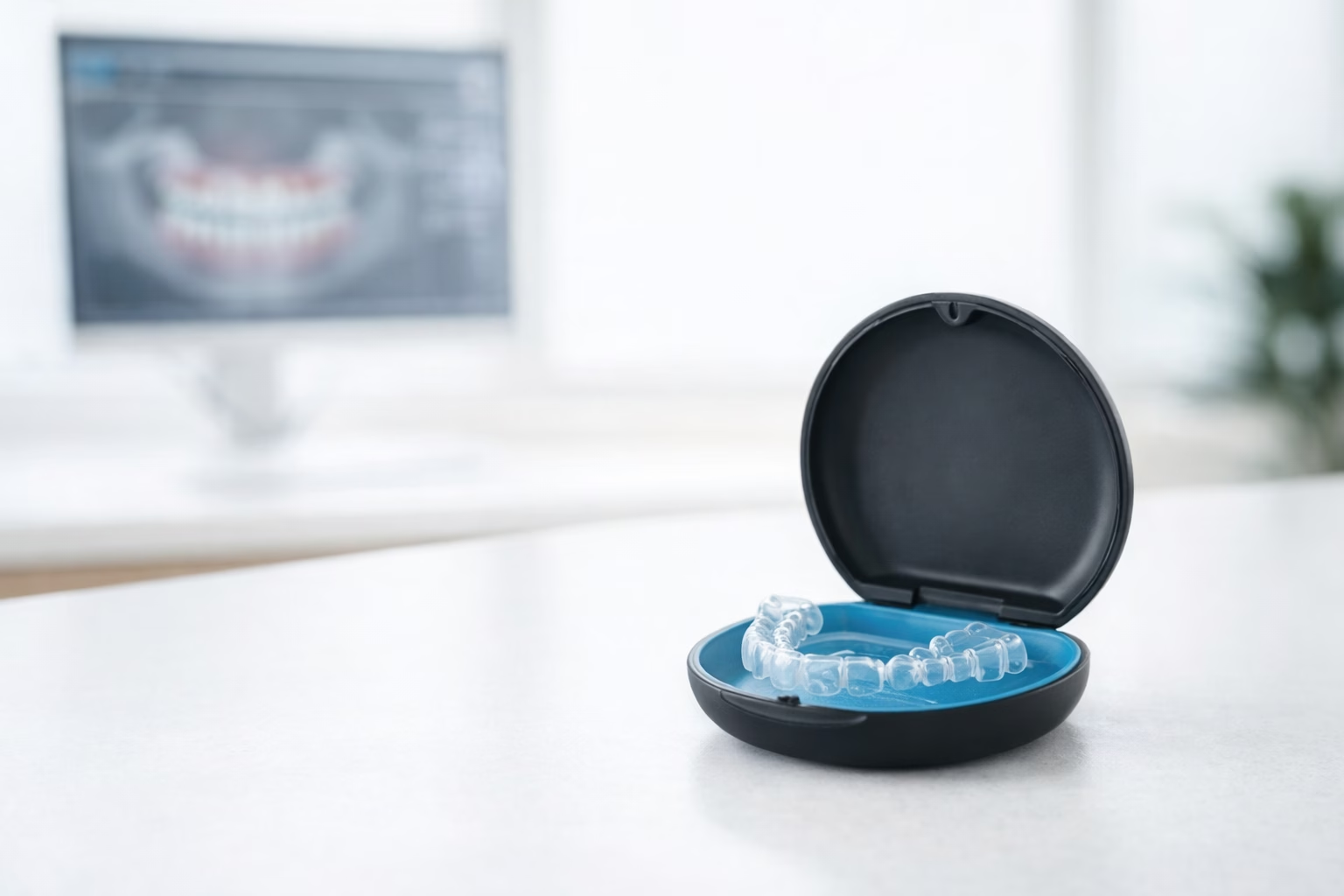
How Invisalign aligners work to move teeth
So, how does Invisalign work in practice? Each aligner is made slightly different from your current tooth positions. When you seat it fully, the plastic applies controlled force to selected teeth. As a result, the surrounding bone remodels gradually and your teeth track through a planned sequence—provided you wear the trays consistently.
For the brand’s own overview, see the Invisalign UK overview.
Key rule: this is a compliance system. If you cut wear-time, tracking slips and treatment can stall or extend.
Invisalign process: what drives results
- Full seating: seat trays fully on every tooth, especially during the first days of a new aligner.
- Wear-time: wear aligners close to full time, removing only for eating and cleaning.
- Invisalign attachments/IPR when indicated: we use these tools to improve grip, control and predictability.
- Monitoring: we check tracking, bite contacts and hygiene so we can intervene early.
How does Invisalign work step by step?
Next, here’s the sequence most patients experience. Your plan can vary depending on complexity, bite goals and how your teeth track.
Invisalign step-by-step: Phase 1 — scan and plan
We assess your goals, bite, gum health, existing dental work and whether aligners match the job.
We capture a high-precision scan and plan staged movements toward a defined end point.
Invisalign produces your trays to match the plan and your prescribed change schedule.
We fit your first sets and, if required, add attachments to improve control and tracking.
Invisalign step-by-step: Phase 2 — active alignment
You wear aligners close to full time and switch sets on schedule. Expect tightness for 24–72 hours after each change.
We verify tracking, bite contacts, hygiene and attachment integrity. If something slips, we correct it early.
Invisalign step-by-step: Phase 3 — finish and stabilise
If the last trays don’t finish the details, we rescan and plan a short refinement series.
Finally, we fit retainers and set a wear plan to protect your result long-term.
Visual overview (how Invisalign works)
Then, use this quick visual to see how the stages fit together—from planning through to retention.

Invisalign attachments (buttons): what they are and why they matter
Attachments are small composite shapes we bond to specific teeth. They give aligners leverage for rotations, root control and bite corrections that trays alone often can’t deliver.
- They’re common: many cases need them for predictable movement.
- They can feel rough at first: you notice them most when trays are out.
- They can debond: if one comes off, we rebond it promptly to protect tracking.
Tip: expect attachments upfront—patients who feel “surprised” by them often drop wear-time, and tracking slips.
Invisalign IPR (enamel polishing): what it is and when we use it
IPR is controlled polishing of tiny amounts of enamel between selected teeth. We use it to create space, improve contact points and reduce black triangles when the plan benefits from it.
- Why: relieve crowding, reduce collisions and improve finishing.
- Feel: usually pressure/vibration rather than pain.
- Finish: we smooth surfaces to reduce plaque traps.
How does Invisalign work day to day?
Most prescriptions require near full-time wear (often 20–22 hours/day). However, the key is consistency: the more reliably you wear trays, the more predictably they track.
Invisalign step-by-step tray changes: when you switch aligners
We set your change schedule clinically. Many patients switch every 1–2 weeks, but we base timing on your plan and your tracking.
How Invisalign works when aligners don’t fit (tracking)
If a tray won’t seat, don’t force it and hope. Instead, act early—tracking problems are usually fixable.
- We check for attachment loss, under-seating or lagging movement.
- Then we adjust: we may extend wear-time, rebond an attachment or plan refinements.
- As a result, small issues stay small and treatment stays on track.
How Invisalign works with crowns, implants and gum health
These are exactly where dentist-led planning matters most.
- Crowns/implants: implants cannot move, so we plan around fixed teeth and bonding needs.
- Pregnancy: nausea or gum sensitivity can reduce wear-time, so we support hygiene and compliance.
- Smoking: increases staining and hygiene load, so tray handling must stay disciplined.
- Whitening: timing matters around attachments to avoid uneven shade outcomes.
- Gum disease: stabilise inflammation first before moving teeth.
Related Invisalign guides (recommended next)
How does Invisalign work FAQs
How does Invisalign work to move teeth?
It uses a sequence of aligners that apply planned pressure to specific teeth. When you wear trays consistently, your teeth track through small movements until you reach the planned finish.
Do I really need to wear aligners 20–22 hours a day?
Usually, yes. If you reduce wear-time, teeth lag behind the plan, trays stop seating properly, and treatment can take longer.
What are Invisalign attachments and why might I need them?
Attachments are small composite shapes we bond to teeth to help aligners grip and control difficult movements, such as rotations or bite corrections.
Does Invisalign hurt?
You should expect pressure or tightness, especially for 24–72 hours after changing to a new aligner. If you get sharp pain or rubbing, we want to check it.
How often do you change aligners?
It depends on your prescription and tracking. Many plans use changes every 1–2 weeks, and we set your schedule clinically.
What is IPR and will I need it?
IPR is controlled enamel polishing between selected teeth to create space and improve finishing. We recommend it only when it improves predictability and stability.
What if my aligners stop fitting properly?
Contact us early. We’ll check for under-seating, lost attachments or tracking issues, then adjust wear-time or plan refinements so you don’t lose momentum.
What happens after treatment finishes?
Retention protects the result. We provide retainers and a wear plan, then we review stability at check-ups.
Book an Invisalign consultation at Azure Dental
Still wondering: how does Invisalign work for your specific bite? We’ll confirm suitability, explain Invisalign attachments/IPR upfront, and map a realistic step-by-step plan to your end result.
