
Invisalign vs Braces: Which Orthodontic Treatment Is Right for You?
Invisalign vs braces is one of the most common comparisons for adults and teens who want straighter teeth. While both treatments can deliver excellent results, they differ in appearance, comfort, treatment time, cleaning, cost and day-to-day convenience.
For example, some patients want the most discreet option possible, while others want the best choice for more complex tooth movement. As a result, the right treatment depends on your smile, your bite and your lifestyle rather than one simple rule.
If you are still deciding between fixed and removable systems, our guide to braces in Liverpool gives a broader overview of the options available for adults and teens. In this guide, we compare Invisalign clear aligners with fixed braces so you can understand the main differences clearly.

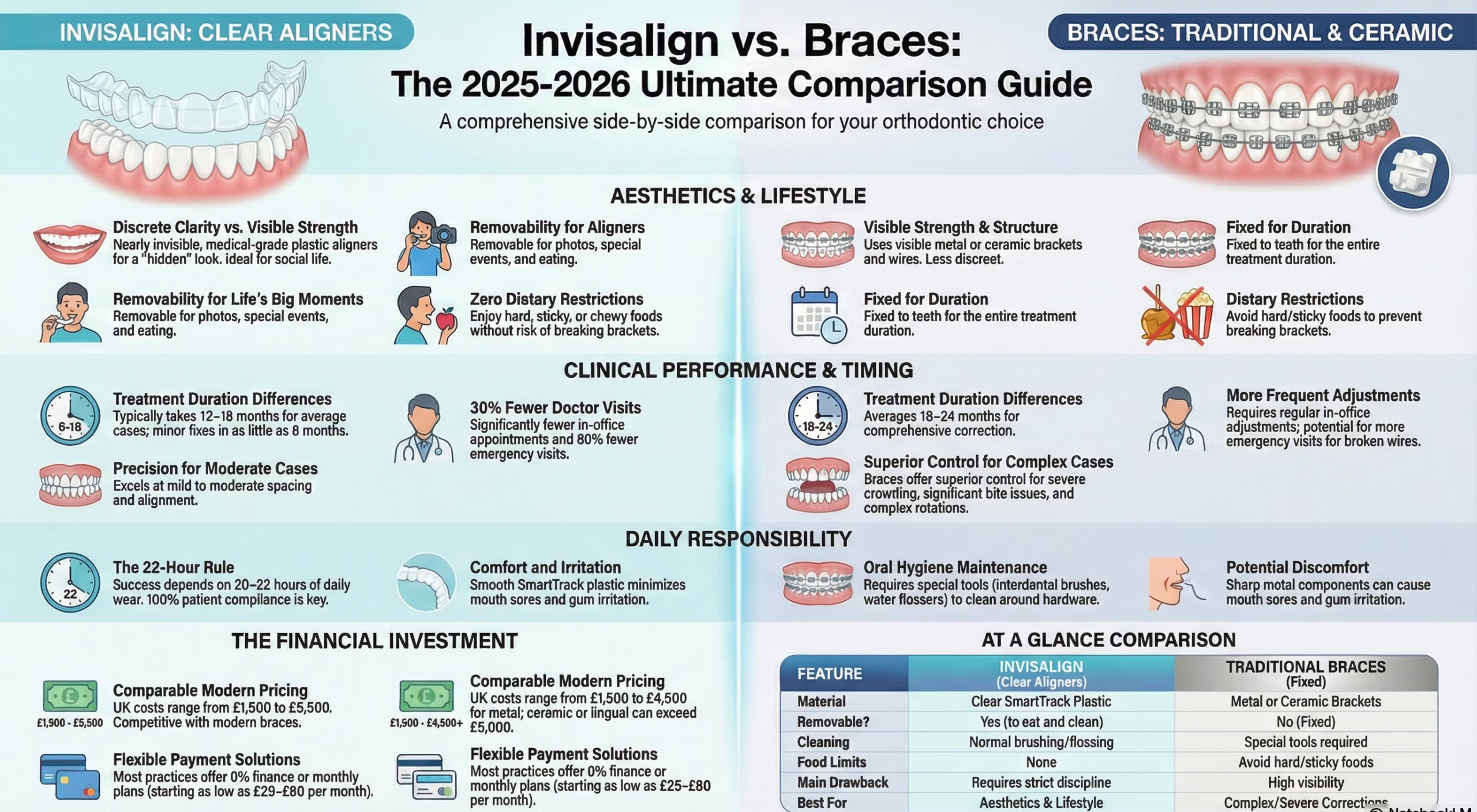
Invisalign vs Braces: At-a-Glance Comparison
| Factor | Invisalign | Fixed Braces |
|---|---|---|
| Appearance | Virtually invisible clear aligners | Visible metal or ceramic brackets |
| Comfort | Smooth removable trays | Brackets and wires can rub at first |
| Oral hygiene | Removed for brushing and flossing | More care needed around brackets and wires |
| Treatment time | Often efficient for mild to moderate cases | Often preferred for more complex movements |
| Lifestyle impact | Minimal food restrictions if worn correctly | Usually some food restrictions apply |
| Compliance | Must be worn consistently | Works continuously because it stays fixed |
What Is Invisalign and How Does It Work?
Invisalign uses a series of custom-made, removable clear aligners to move teeth gradually into position. Because treatment is digitally planned from the start, tooth movement is controlled and predictable. In addition, the aligners can be removed for eating, brushing and flossing, which many adults find convenient.
If you want a fuller overview of clear aligner treatment, our Invisalign treatment page explains how the system works, who it suits and what to expect from treatment.
What Are Fixed Braces and When Are They Used?
Fixed braces use brackets bonded to the teeth and wires that are adjusted over time to guide movement. Although they are more visible, they are extremely effective. Therefore, braces are often recommended when more precise control is needed for complex crowding, rotations, bite correction or larger tooth movements.
If you prefer a more discreet fixed option, our page on white braces in Liverpool explains how ceramic braces compare in everyday life.
Invisalign vs Braces: Key Differences Explained
Cost Differences Between Invisalign and Braces
Private Invisalign and private braces are often closer in fee than patients expect. However, the total cost depends on case complexity, treatment length and the system used. If cost is one of your main deciding factors, see our guide to braces cost in Liverpool for a clearer breakdown of pricing, finance and what affects the fee. You can also read our page on Invisalign cost in the UK for aligner-specific pricing guidance.
Comfort and Pain Differences During Treatment
Invisalign usually feels like pressure when you switch to a new aligner. By contrast, braces can cause soreness after adjustments and may irritate the lips or cheeks at first. Even so, both options are manageable, and any discomfort usually settles as you adapt.
Treatment Time: What Affects How Long It Takes
Invisalign can be very efficient for mild to moderate alignment problems. On the other hand, braces may be more predictable for complex bite correction or movements that need constant fixed control. So, treatment time depends less on the brand and more on the difficulty of the case. See how long Invisalign takes for a clearer time guide.
Expected Results and Treatment Outcomes
Both options can deliver excellent results when the case is suitable and the plan is followed properly. For that reason, the best treatment is the one that fits the clinical needs of your smile. If you want to see examples of aligner outcomes, view our Invisalign before and after results.
Invisalign vs Braces: Who Should Choose What?
Invisalign Is Often Best For
- Adults and teens who want discreet treatment
- Mild to moderate crowding or spacing
- Patients who value convenience and easier cleaning
- People who are likely to wear aligners as instructed
Braces May Be Better For
- Complex bite correction or significant rotations
- Patients who want treatment working all the time
- Cases where fixed control is clinically preferable
- Adults comparing fixed systems as well as aligners
If you are comparing options as an adult, it is also worth reading about adult braces in Liverpool for a more focused look at adult treatment choices. Some patients also compare Invisalign vs clear braces when deciding between discreet systems.
Clinical point: Invisalign is not automatically “better” than braces, and braces are not automatically “old-fashioned”. Instead, the correct choice depends on the movements required, the bite, your compliance and the result you want to achieve.
Frequently Asked Questions About Invisalign and Braces
Is Invisalign better than braces?
Neither is universally better. Invisalign is discreet and convenient, while braces are often better for complex cases or movements that need fixed control.
Does Invisalign hurt less than braces?
Generally, Invisalign causes less irritation because there are no brackets or wires, although both treatments can create temporary pressure or soreness.
Is Invisalign faster than braces?
Sometimes, yes. Invisalign can be faster for suitable mild to moderate cases, while braces may be more efficient for some complex movements.
Are Invisalign results the same as braces?
For suitable cases, Invisalign can achieve results comparable to braces. The key issue is whether the treatment system matches the clinical requirements of the case.
Can adults choose braces instead of Invisalign?
Yes. Many adults still choose braces for clinical, practical or financial reasons, and some prefer discreet ceramic fixed braces.
Is Invisalign worth the extra cost?
For many patients, yes, especially if they value aesthetics, convenience and easier cleaning. However, the value depends on your priorities and the complexity of treatment.
Still Unsure Which Option Is Right for You?
Ultimately, every smile is different. Therefore, a professional assessment is the safest way to decide whether Invisalign or braces will give you the most predictable and stable result.