
All-on-4 vs All-on-6 Dental Implants (Full-Arch “Teeth in a Day”)
If you’re comparing All-on-4 vs All-on-6, you’re asking the right question: “What’s the safest, most predictable way to get fixed teeth for the long term?” That said, both can work extremely well—provided that the implant count is matched to your bone, bite forces and risk factors.
All-on-4 vs All-on-6: what’s the real difference?
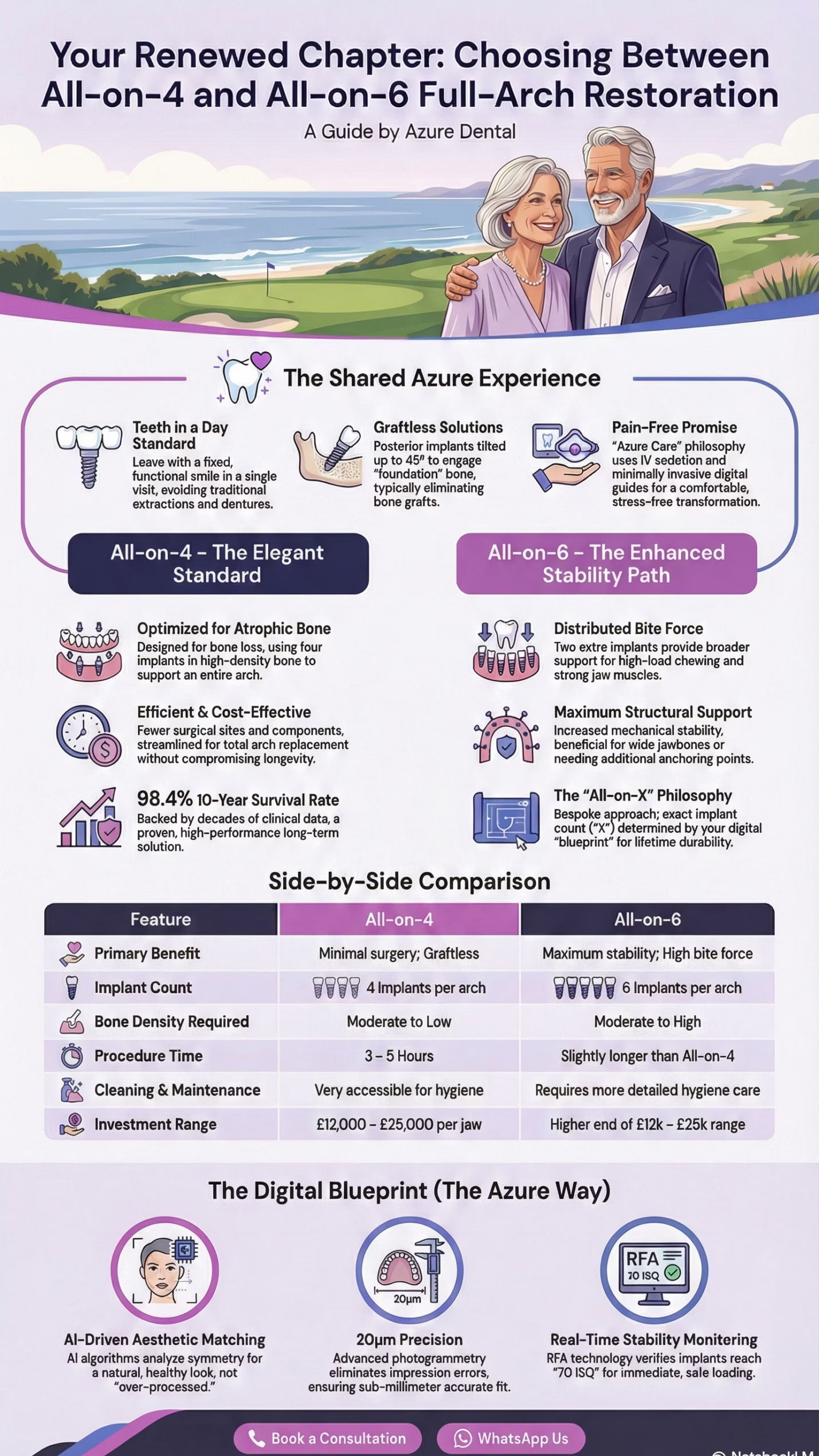
All-on-4 dental implants use four implants per arch to support a full set of fixed teeth, whereas All-on-6 uses additional implants for support.
Typically, the All-on-4 protocol uses two front implants plus two angled posterior implants to maximise your existing bone; therefore, traditional grafting can often be avoided. By contrast, All-on-6 adds two more implants to spread forces further—especially helpful when bite forces are higher and bone quality is strong enough to support it.
All-on-4 vs All-on-6: choosing the right implant count
Crucially, the final smile is planned first. Then we engineer the safest foundation beneath it. As a result, some patients are best served by All-on-4, while others are better served by All-on-6—based on CBCT bone mapping, jaw shape, bite forces and risk management.
- 3D CBCT planning to measure bone and avoid vital structures
- Digitally guided placement for accuracy and comfort
- Immediate fixed provisional for “Teeth in a Day” cases
All-on-4 vs All-on-6 at a glance
| Feature | All-on-4 | All-on-6 |
|---|---|---|
| Primary benefit | Fewer implants; often graftless; efficient | More support; wider force distribution |
| Implant count | 4 implants per arch | 6 implants per arch |
| Bone requirement | Often suitable with moderate bone loss | Typically needs stronger bone volume/quality |
| Procedure time | Usually shorter surgical time | Slightly longer surgical time |
| Cleaning & maintenance | Very accessible for hygiene | May require more detailed hygiene care |
| Investment | Typically lower due to fewer implants | Higher due to extra implants and components |
Clinical suitability is determined case-by-case after a full assessment.
All-on-4: the elegant standard
- Optimised for reduced bone volume by using angled posterior implants to engage stronger bone.
- Efficient & cost-effective because there are fewer surgical sites and components.
- Proven long-term predictability when planned digitally and maintained properly.
All-on-6: the enhanced stability path
- Distributed bite forces across more support points, which can help for high-load chewing.
- Maximum structural support when bone volume and quality allow.
- Redundancy if additional anchoring points are beneficial for your design.
All-on-4 vs All-on-6 treatment journey (clear and predictable)
Step 1: Digital consultation
To begin with, we discuss your goals (function, confidence, comfort) and assess gum health, bite and any failing teeth.
Step 2: CBCT + digital planning
Next, 3D scanning maps bone density and anatomy so implant positions are planned safely and precisely.
Step 3: Surgery + fixed temporary teeth
Finally, in suitable cases, you leave with a fixed provisional bridge the same day (“Teeth in a Day”).
Afterwards, your final bridge is typically fitted after healing, once integration and stability are confirmed.
All-on-4 vs All-on-6 success rate and lifespan
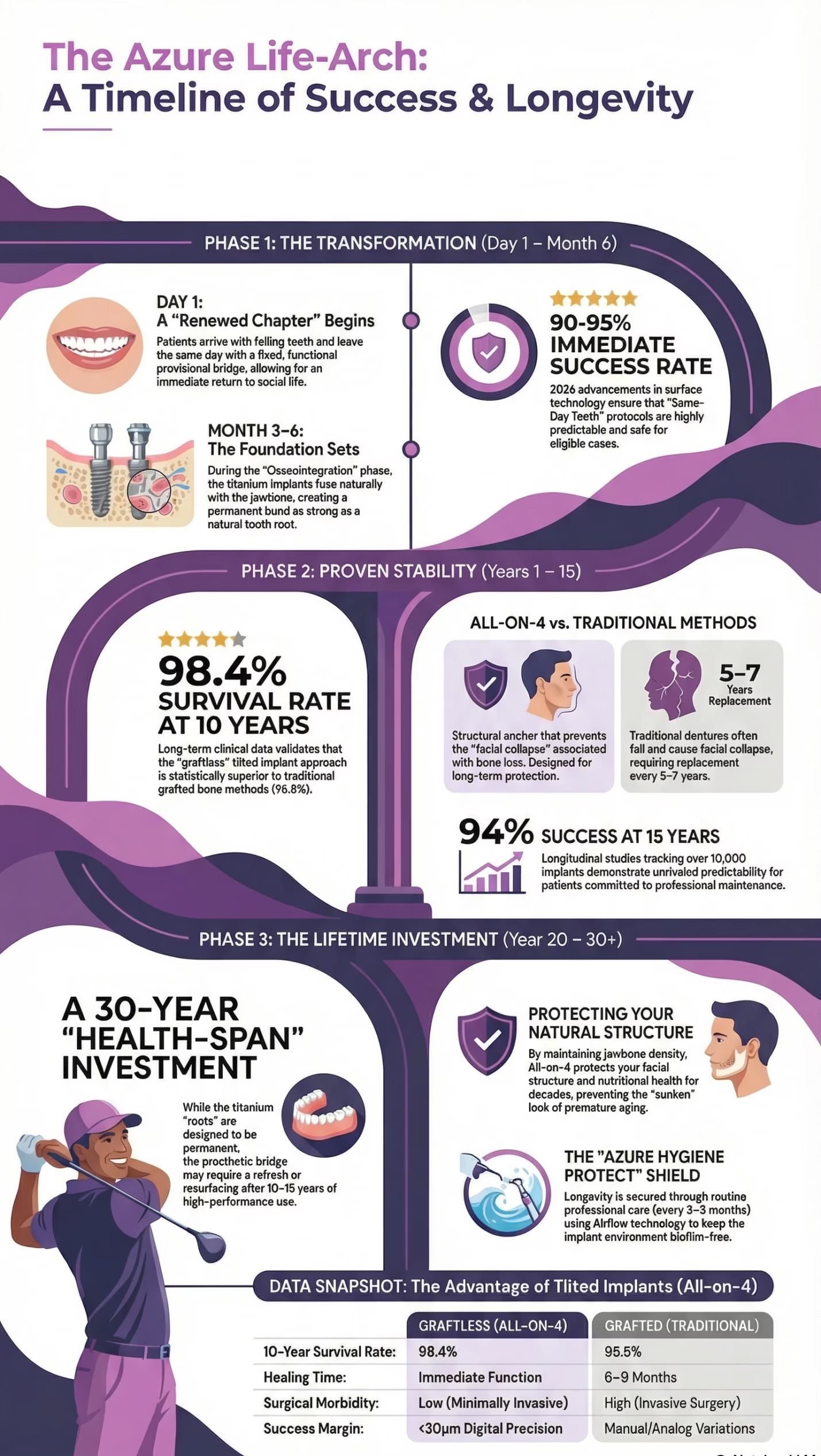
Full-arch fixed implant bridges are designed as a long-term solution. Importantly, published data on graftless tilted protocols commonly reports high long-term predictability, with frequently cited outcomes around a 98.4% 10-year survival rate in suitable cases—supported by appropriate planning and ongoing maintenance.
- Firstly, longevity depends on risk control (smoking, diabetes control, gum health), fit accuracy, and maintenance.
- Secondly, bridge material choice can affect chipping and repairs over time.
All-on-4 vs All-on-6 candidacy: who is not suitable?
Honest screening protects outcomes. Therefore, we may recommend alternatives or staged care if you have uncontrolled systemic risk factors or functional overload risks.
- Uncontrolled diabetes or poor healing capacity
- Heavy smoking
- Active gum disease needing stabilisation first
- Severe bruxism (may require bite management or design changes)
If anything here applies, it does not automatically exclude you—however it does change the plan.
The Azure Life-Arch timeline
A clear overview of immediate teeth, healing, and long-term maintenance. Tap to enlarge.
What affects the cost of All-on-4 vs All-on-6?
There is often a noticeable cost difference between All-on-4 and All-on-6, which can influence which option is most appropriate.
For example, the implant count affects both componentry and surgical time. In addition, planning complexity, bridge materials and aftercare protocols can shift the final figure.
- Implant number and components (4 vs 6)
- Bone management (whether grafting is required)
- Bridge material (e.g., monolithic zirconia vs hybrid designs)
- Digital workflow (guided surgery, high-precision scanning/fit)
If you want, we will also show you finance options and monthly figures during consultation.
How to choose between All-on-4 and All-on-6
For many patients, the deciding factor is which option offers better value based on long-term outcomes rather than upfront cost alone.
In short, the safest choice is the option that matches your bone, bite forces and risk factors. Ultimately, that creates a more stable long-term result and reduces avoidable complications.
- Bone quality and volume (from CBCT)
- Bite forces (chewing strength, clenching/grinding)
- Design requirements (jaw shape, arch span, prosthetic material)
- Risk management (gum health, smoking, systemic factors)
All-on-4 vs All-on-6 FAQs
All-on-4 vs All-on-6: teeth in a day and recovery
Do both options give you teeth in a day?
In suitable cases, yes. Both approaches can support an immediate fixed temporary bridge on the day of surgery. After surgery, final teeth are fitted after healing once stability and integration are confirmed.
How long is recovery?
Most patients experience manageable swelling and return to normal routines relatively quickly. Meanwhile, we’ll give you a clear recovery plan and review schedule, so you know what to expect at each stage.
All-on-4 vs All-on-6: bone, stability and long-term risk
Is All-on-6 “better” than All-on-4?
Not universally. All-on-6 can suit higher bite forces or stronger bone by spreading load across more implants. However, All-on-4 is highly predictable for many patients and can often reduce the need for grafting. In other words, “better” depends on your anatomy and risk profile.
Will I need bone grafting?
Often not with All-on-4, because angled posterior implants can engage available bone and reduce the need for grafting. Conversely, All-on-6 may require more available bone volume; therefore, grafting depends on your CBCT findings and anatomy.
Which is better if I grind my teeth?
Grinding increases overload risk. In some cases, All-on-6 (plus appropriate bridge design and a night guard) provides a wider force distribution. Therefore, we assess this carefully because unmanaged bruxism can increase complications.
Will my new teeth look fake?
They should not. Digital planning is used to design tooth position, lip support and smile line to avoid a denture-like appearance. As a result, the final design is tailored to your face, bite and speech.
What can go wrong?
Like any advanced procedure, risks can include infection, integration failure, screw loosening, and long-term wear/chipping depending on materials and bite forces. Importantly, preventable risks include unmanaged gum disease, smoking, uncontrolled diabetes and untreated grinding.
All-on-4 vs All-on-6: deciding what’s right for you
How do I choose between them?
For many patients, the deciding factor is which option offers better value based on long-term outcomes rather than upfront cost alone.
We decide based on: (1) CBCT bone quality/volume, (2) your bite forces and habits, (3) whether grafting would be needed, and (4) long-term risk management. Ultimately, you’ll be given a clear recommendation—and the “why” behind it.
Next step: a calm, no-pressure consultation
We can get you booked for a consultation, or if you prefer, we can answer questions first by email/WhatsApp—whatever feels right for you.