
All-on-4 Alternatives (What’s Cheaper?)
If you’re researching All-on-4 alternatives (dentures, snap-in implant dentures, or staged treatment), the real decision is stability, comfort, and what you spend over 5–10 years. All-on-4 dental implants are often used as the benchmark when comparing other full-arch implant solutions. That benchmark, in turn, makes it easier to see where “cheaper” options may cost more in upkeep later.
- Clear comparison of removable vs fixed full-arch teeth
- Typical UK cost drivers and the “hidden costs” to plan for
- Simple guidance: who each option suits best
Quick answer: what’s the cheapest option?
Lowest upfront cost: traditional removable dentures. Mid-range stability: implant-retained “snap-in” dentures (removable, but far more secure). Fixed teeth: staged treatment or finance can cut the upfront hit without choosing a solution you may outgrow.
Think “upfront cost” + “10-year upkeep”Nervous about dentistry? We prioritise comfort and can discuss sedation if clinically suitable.
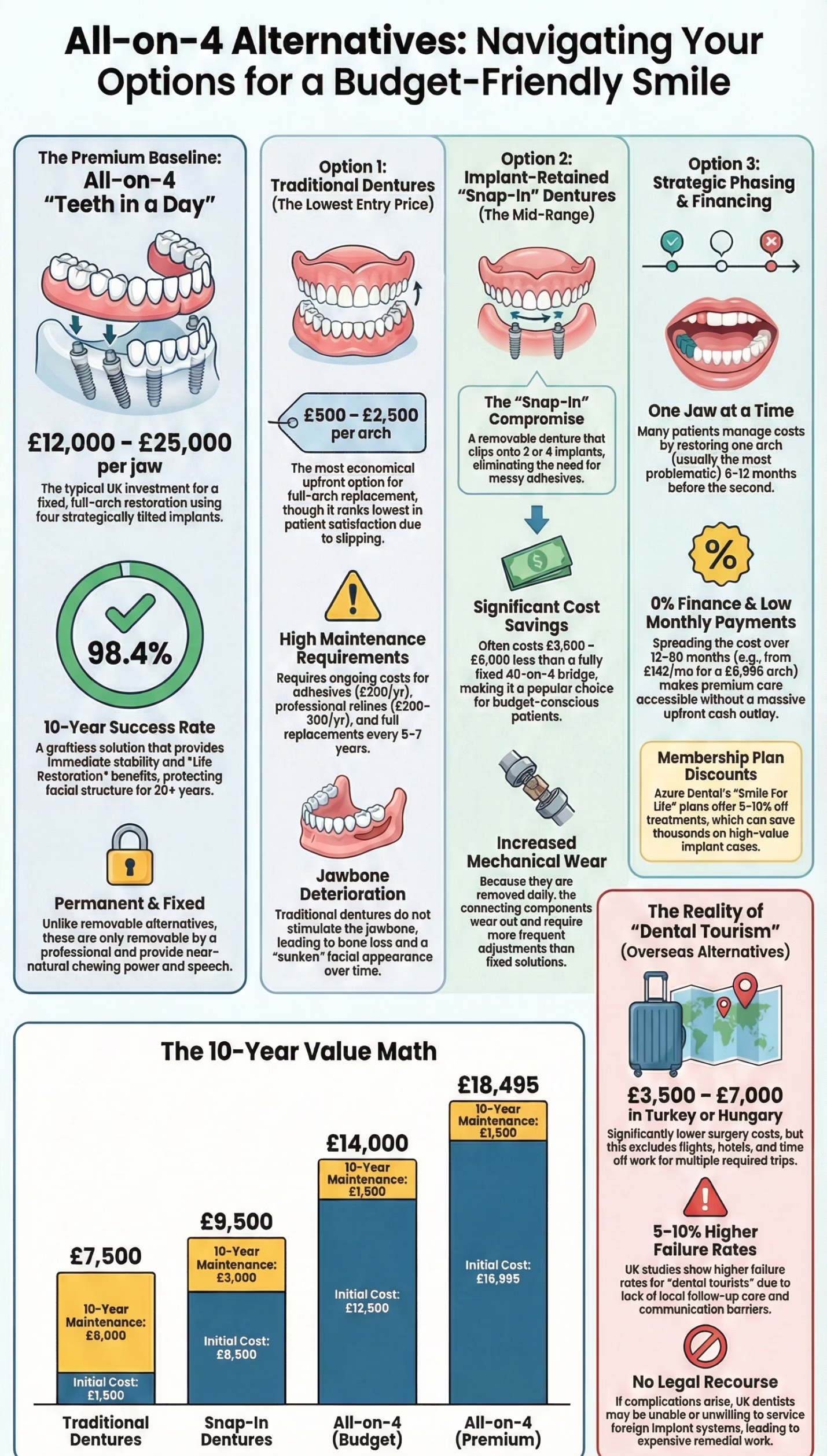
All-on-4 alternatives: what’s cheaper than All-on-4?
Most All-on-4 alternatives are cheaper because they are removable, need more upkeep, or feel less secure. Therefore, the best choice depends on what matters most to you: comfort, bite strength, looks, speed, and budget.
Option 1: Traditional dentures (lowest entry price)
A removable full denture sits on the gum. In many cases, it’s the quickest, cheapest way to have teeth again. Over time, the fit can change as the jaw slowly shrinks, so relines may be needed.
- Lowest upfront investment
- No implant surgery
- Fast route to having teeth again
- Can slip or rub; adhesives may be needed
- Fit can change as bone reduces
- Often weaker bite than fixed teeth
Snap-in dentures vs All-on-4 (implant-retained dentures)
A removable denture that clips onto implants for day-to-day grip. As a result, it usually feels far more secure than a standard denture. For cleaning, you still remove it at home.
- What improves (vs dentures)Less rocking, better confidence, often easier eating and speech.
- What stays (vs fixed)It still comes out; clips/parts can wear and need servicing.
Cost comparison with All-on-4: upfront price vs long-term value
For price-sensitive decisions, compare two numbers: what you pay upfront and what you pay to keep things working well. In other words, understanding the pricing comparison with All-on-4 helps patients judge whether a cheaper option stays good value over time.
Upfront cost (what you pay to start)
Cheapest start; however, you may trade comfort and bite strength for the low price.
More secure than dentures. Nevertheless, the denture remains removable and parts can wear.
Built for the most stable feel and function; consequently, it is typically the highest upfront investment.
Ongoing upkeep (what you pay over 5–10 years)
Over time, dentures often need relines and repairs as the mouth changes. Additionally, snap-in dentures may need replacement clips or attachments as components wear. Meanwhile, fixed teeth still need check-ups and professional cleaning, but day-to-day comfort is usually higher when the plan is right.
When “traditional full-arch implants” aren’t cheaper than All-on-4
Many people assume “traditional” full-arch implants are cheaper. In reality, full-arch plans using more implants and complex lab work can cost more than an All-on-4 pathway. Ultimately, your bone, bite forces, and health factors decide what makes sense.
FAQs
All-on-4 alternatives: cost and value
What are the best All-on-4 alternatives if I want something cheaper?
Traditional dentures are usually the lowest upfront cost. However, implant-retained “snap-in” dentures can offer much better stability while staying more budget-friendly than fixed teeth. If fixed teeth are the goal, staged treatment and finance can reduce the upfront burden.
Are snap-in dentures a good alternative to All-on-4?
Yes—if removable teeth are acceptable to you. In that case, snap-in dentures often feel far more secure than conventional dentures. Over time, clips or attachments may need servicing, which should be planned for.
How much do snap-in dentures cost in the UK?
Costs vary by implant number, bone, and denture design. For example, simpler cases can start from a few thousand pounds, while more complex overdentures can be higher. A clinical assessment is needed for accurate pricing.
Are dentures cheaper long-term than All-on-4?
Dentures are usually cheaper upfront. Nevertheless, relines, repairs, and replacements can add up over the years. By contrast, fixed full-arch teeth cost more at the start but are designed for stability and day-to-day comfort when maintained properly.
Planning, staging and safety
Can I do one jaw at a time to reduce cost?
Yes, and it’s a common approach. Typically, the most difficult arch is restored first, and the second arch is completed later. As a result, the cost is spread while still keeping the same end goal.
Is All-on-4 cheaper than “traditional” full-arch implants?
Often, yes. In suitable cases, All-on-4 can be cost-efficient because it uses fewer implants per arch and can reduce surgical complexity. That said, suitability depends on bone, bite, and clinical risk factors.
Is dental tourism a safe cheaper option?
It can work; however, follow-up care is a common issue. Full-arch implant work often needs checks and small adjustments, particularly in the first year. If you go overseas, confirm the implant system, warranty, and who provides aftercare in the UK.
Can I get finance for All-on-4?
Finance is commonly available (subject to status). Therefore, if cost is the main barrier, finance or staged treatment can be better than choosing a lower-cost option you plan to replace. A consultation will confirm the best pathway for your case.
Get a clear recommendation (without guessing)
In short, tell us what you’re wearing now (dentures, failing teeth, bridges) and what you want (fixed vs removable). Then we’ll outline the most cost-effective plan for your mouth and your budget.
Educational content only. Suitability and costs depend on clinical assessment, scans, and medical history.